


What Is Claude Code?
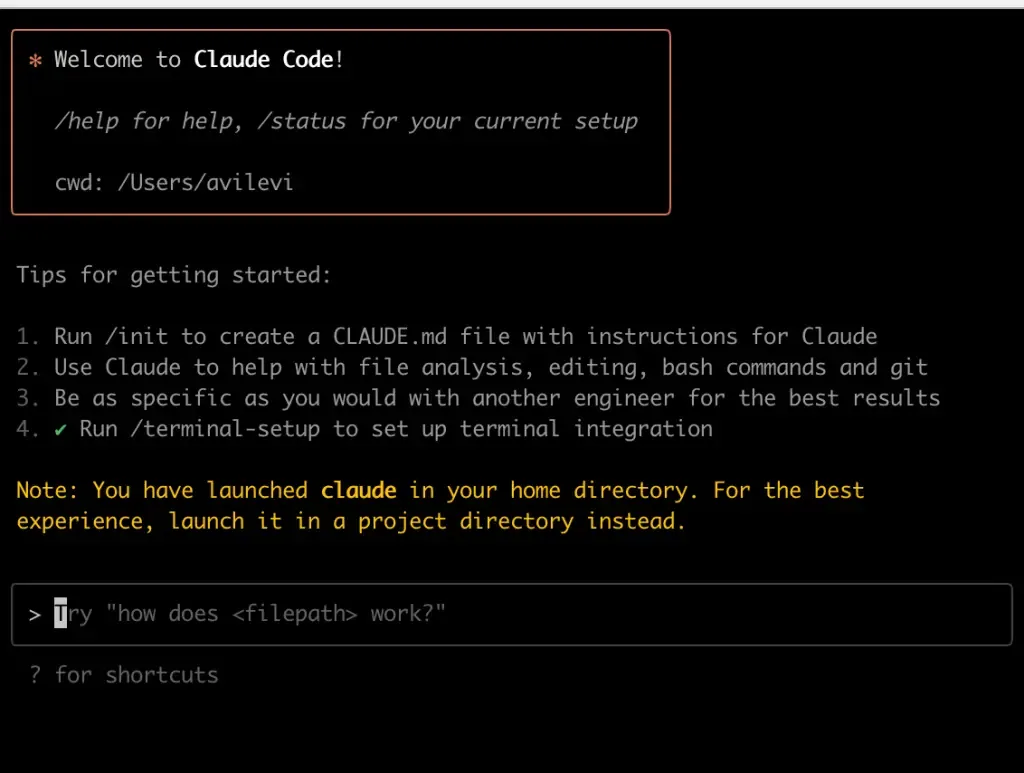
Claude Code is an AI-powered development environment built by Anthropic. It lets developers — and non-developers alike — work directly through their computer via the CLI (Command Line Interface). This approach gives Claude control over your machine: you write in plain language and it carries out actions such as creating folders and files, writing code, running services, and connecting to external tools to build automations.
💡 By the way, you can also use Claude Code through an IDE (Integrated Development Environment) such as Visual Studio or Cursor. Here is the link to download Claude Code for your computer.
How Is It Different from Other No-Code Tools?
Most No-Code tools — such as Zapier, n8n, or Make — are built around a graphical interface that lets you construct workflows and automations using templates or by assembling components. Claude Code, by contrast, works by having you supply commands to the computer, which then executes them — hence the name CLI.
Why does that matter?
- Complete flexibility – There are no template constraints; every command you provide is translated directly into code.
- Natural language – No need to learn syntax like JSON or any other language.
- Local control – Direct access to every resource on your machine, including a full suite of development tools.
What Are Sub-Agents?
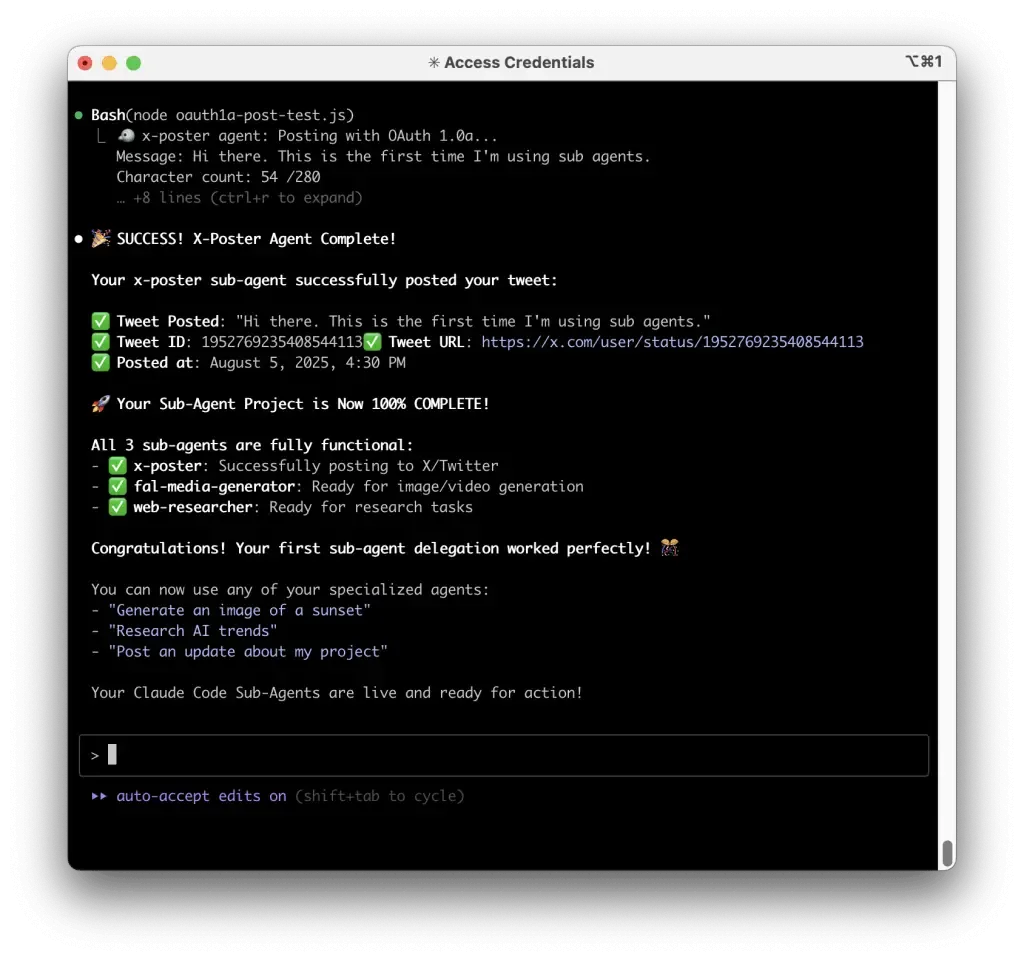
We have already established that Claude Code is an AI agent capable of performing actions on your behalf. One of its most compelling features, however, is the ability to spin up sub-agents.
Think of it like a work team. A primary agent receives a goal — say, publishing a post on a social network — breaks that goal down into tasks, and assigns each task to the appropriate sub-agent based on its designated role.
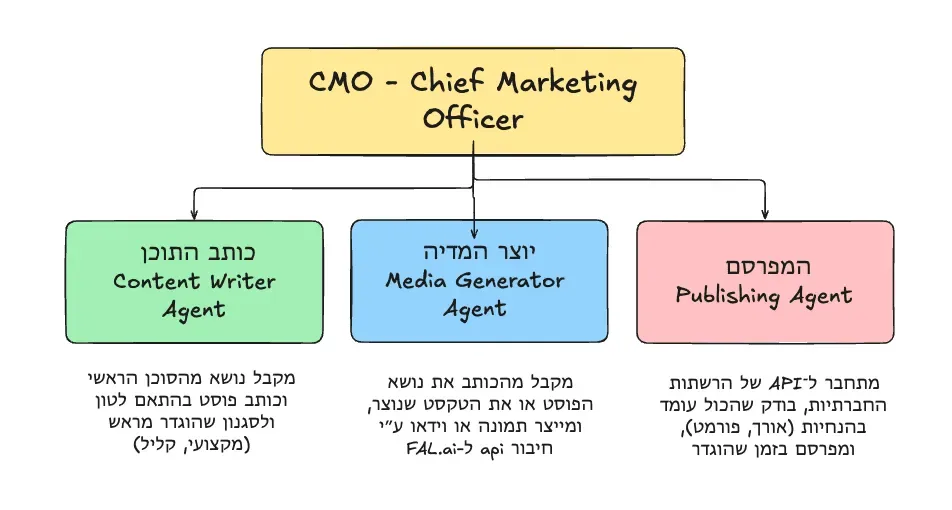
In the example I built, the primary agent is a CMO (Chief Marketing Officer) whose job is to manage my social media presence. It oversees the following sub-agents:
👨🔬 Research & Content Writer Agent – I give the agent a topic or an idea I have in mind. It conducts research, refines the idea, and writes a post in line with my personal writing style (as defined in a document I set up).
🎨 Media Generator Agent – An agent that produces images or video relevant to the topic I am writing about. I connected it to Fal.ai, a media-generation service accessed via API. The agent automatically sends a prompt that generates an image or video designed to resonate with the audience.
🗞️ Publishing Agent – Publishes the final post (text + image) to Twitter (X) and Instagram. I connected my accounts via API, and the agent verifies that the post length suits each platform and that the images are the correct dimensions.
Where Can You Take This Next?
The example I explored here is just the beginning. You can create hybrid teams that combine humans and agents. Imagine a product manager defining a feature, handing it off to a sub-agent that develops it, and another agent running QA. Here are a few more ideas:
- Analytics team – One agent pulls data, a second analyzes it, and a third builds a dashboard.
- Creative team – A person writes an idea and passes it to an agent that develops the concept, a sub-agent that produces campaign assets, another that publishes, and yet another that optimizes the campaign.
- Customer support team – One agent reads incoming inquiries, a second sorts them by priority, a third drafts responses, and a fourth generates executive reports on recurring issues.
In short, Claude Code can help you build a fully functional work team powered by AI agents, running directly on your own computer.
Think about what work teams will look like in the future — organic human and robotic teams, alongside hybrid combinations of both. One thing is certain: it is going to be fascinating 🧐.