
TL;DR
We set out to make a significant leap in branch professionalism and customer service, but quickly realized that macro-level data — such as customer complaints or goal attainment — wasn’t enough. We needed to truly understand gaps at the individual employee and branch level, in order to identify knowledge gaps and build personalized learning plans rather than yet another blanket reinforcement program where everyone gets the same thing.
So we launched a joint initiative with the Retail Division leadership: we built a bank of over 120 questions at varying difficulty levels for two customer lines (personal-private and business), created tailored assessments in the LMS, validated them with trainees and subject-matter experts, and planned the entire journey — from scheduling and feedback design to precise assignment for each population. We communicated the initiative by email to all employees, sent an official calendar invitation from the Branch Division head, followed up via WhatsApp, and on the day of the assessment we provided real-time support to branches.
The result: 1,250 employees across 168 branches completed the assessment across both business lines, generating a dataset of 31,771 responses. That’s when the challenge shifted — from hitting a participation target to achieving genuine depth of understanding: exactly where the knowledge gaps are, how to prioritize them, and how to present each manager and employee with a relevant, actionable picture. Rather than getting buried in heavy spreadsheets and static reports, we chose to integrate AI into our data analysis and build a dynamic dashboard as the foundation for truly personalized learning.
In the next two posts I’ll share the process we went through and the insights we gained along the way. In this installment, I’ll focus on the first phase of the plan: the 2025 Knowledge Gap Initiative.

The Challenge: Raising Professional Standards and Customer Service Across the Bank
This is something we invest in heavily — improving employee professionalism and closing knowledge gaps. We want to deliver outstanding service to our customers, and professional, knowledgeable responses are a core part of that. Every year in Q4, we run a learning needs assessment process, holding meetings with role-holders across the bank. Those conversations typically focus on the strategic goals and plans of each division or department for the coming year, and how the Learning department can help them achieve those goals through professional and personal development.
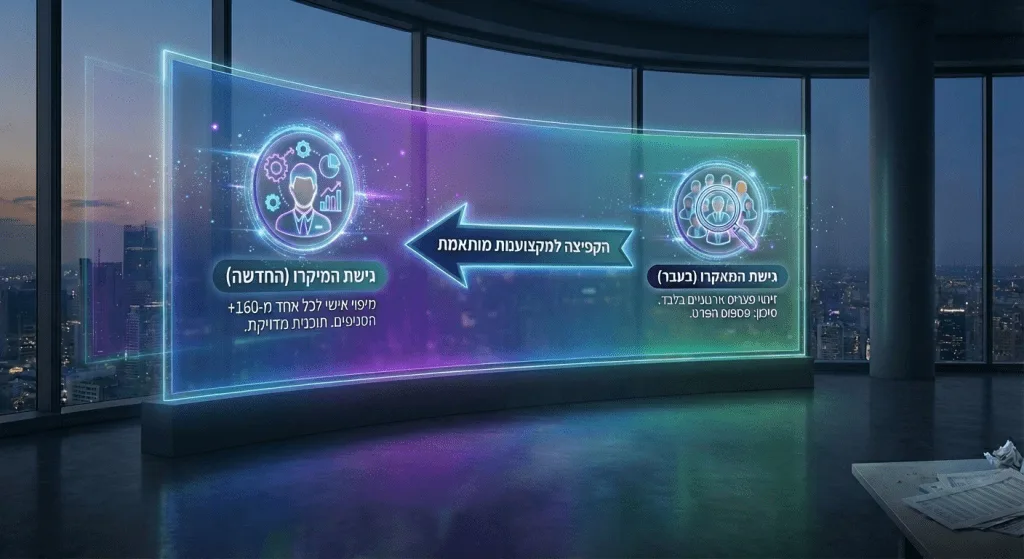
One of our biggest challenges is the branch network. We are a bank with over 160 branches nationwide, and there is enormous variability — in knowledge levels, role tenure, and business focus — across regions and even between individual branches. We want to understand the proficiency level of each employee so we can tailor a personalized professional development plan for them, as much as possible.
The problem is that professional reinforcement has typically been driven by what we see at a macro level. Don’t get me wrong — macro indicators like customer complaints, legal inquiries, and goal attainment clearly point to proficiency gaps that need addressing. But if we want to make a genuine leap forward, we need to understand both the organization-wide gaps and the gaps at the individual employee level, and build a plan that addresses both.
Consider this: there may be an organizational gap that shows up in macro data — say, familiarity with the account-opening process — but in a particular branch there’s a highly experienced employee who handles it exceptionally well. If we make her sit through training on something she already excels at, we’ve lost her engagement. And of course, the reverse situation is equally possible.
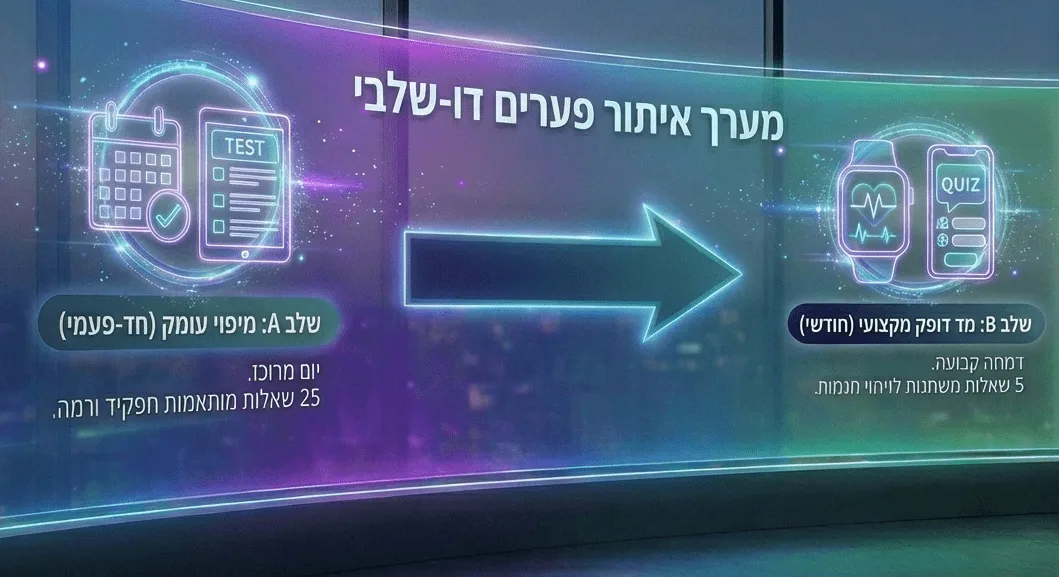
This year we decided to launch an evolving knowledge gap collection initiative. It began with an assessment for all employees on a specific day and time, with each employee receiving an assessment tailored to their area of work, comprising 25 questions at varying difficulty levels and covering a range of topics — fairly standard so far (a knowledge gap assessment). But starting next year, this process will become ongoing. Once a month, a “Professional Pulse Check” questionnaire will be distributed, containing 5 questions on various topics and difficulty levels, drawn from a growing question bank. This will allow us to continuously gather data on professional gaps so we can deliver targeted learning that helps employees overcome them.
Step ☝️ — Launching a Joint Initiative Between the Learning Department and Retail Division Leadership
This process, too, began with an alignment of goals. The Retail Division leadership placed strong emphasis on professional development, recognizing that it drives banking excellence and outstanding customer service. We in the Learning department wanted to build a learning plan grounded in employees’ actual gaps — not based solely on needs-assessment conversations. In parallel, the Retail Division was leading an initiative to create a professionalism index.
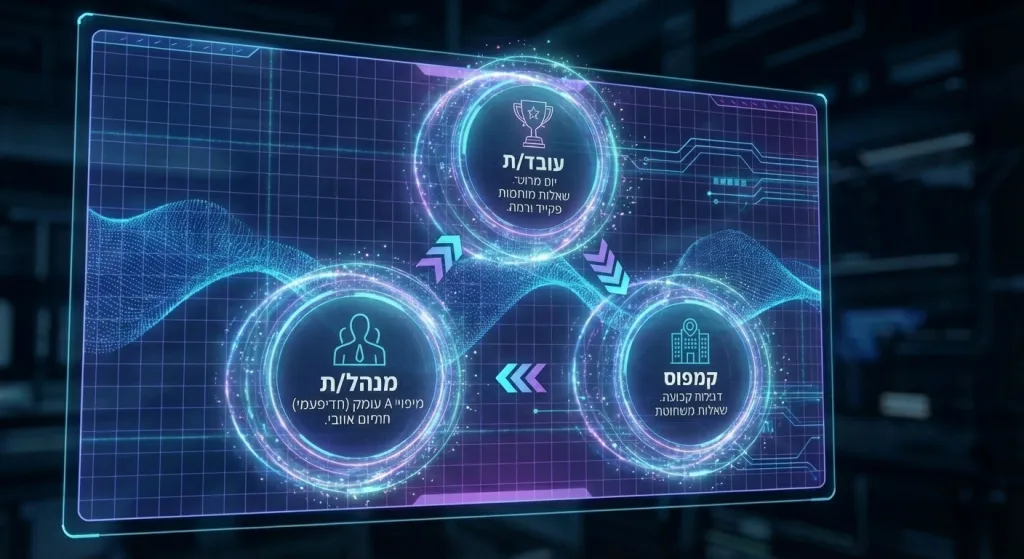
All that remained was to form the holy trinity that, whenever it comes together, makes things work: managers — employees — the organization (in this case, us, the Campus). The Learning department is responsible for providing professional development programs and content for ongoing professional reinforcement, enabling tracking and oversight, and continuously improving our programs. But the people who are with employees day in and day out are their direct managers. The role of frontline management is critical — they need to create the time and environment that enables learning, all while still hitting their own targets. And employees themselves need to take ownership of their own development — to learn seriously, to practice, to ask their managers questions, and above all to keep growing as professionals.
With that in place, it was time to move to the next step…
Step ✌️ — Building and Validating the Question Bank and Assessment
At this stage we did what we do best. The talented team of instructors at the Campus got to work building a bank of over 120 questions spanning various banking topics, varying difficulty levels, and aligned to each customer line. The instructors crafted questions that require genuine analytical thinking, with answers that are not straightforward.
Once we had the question bank, the learning technologies team stepped in. They created the question bank in the Learning Management System (LMS), organized into categories, and then loaded all the questions — anyone who hasn’t experienced uploading content to an LMS has no idea what real stress feels like. They then created a separate assessment for each customer line (personal-private and business), configured the time limit, feedback delivery, and completion conditions, and finally set up the assignment of each assessment to the relevant populations, including the appropriate automated emails, so that everything would run like clockwork.
Along the way, we ran a quick pilot with trainees attending courses at the Campus, having them complete the assessment as part of their course, in order to gather feedback on difficulty level, question wording, and completion time. The feedback was genuinely valuable — trainees said the assessment was challenging but engaging. We also validated all content with various subject-matter experts across the organization before going live.
Once we had sign-off from all stakeholders, all that was left was to communicate the initiative to branch employees and launch — which brings us right to the next section 👇
Step ☝️✌️ — Communicating the Initiative and Completing the Assessment
At this point we had all stakeholders on board ✔️, tailored assessments for each customer line ✔️, and a completed usability review ✔️. All that remained was to start communicating the initiative. We chose a combination of channels:
- An initiative mailer — sent to all employees and managers, explaining the purpose, the benefits for employees, when it would take place, key details about the assessment itself, and what the plan looked like going forward.
- A calendar invitation from the Branch Division head — sent to all employees, blocking one hour on a specific day to complete the assessment. This also carried a clear signal from division leadership about the importance they placed on the initiative.
- WhatsApp group posts — we prepared memes to be shared across the various groups as reminders one week, two days, and one day before the assessment.
Step ✌️✌️ — Assessment Day
On the day itself, we set aside dedicated time to support branches — handling login issues, employees who hadn’t received the assessment, assessments that froze, or anything else that came up. We wanted to be available and provide real-time support to minimize disruption; after all, these people are serving bank customers. Honestly, apart from a handful of isolated cases, there were no significant issues — which genuinely surprised us.
By the end of the day we had reached a completion rate of approximately 65%. That may be a representative sample, but as I mentioned, our goal is to reach the individual level — so the more responses we have, the more employees we can reach with tailored learning plans. After the assessment closed, we decided to open an additional window one week later, which brought our overall response rate to over 75%.
In numbers:
- 🏢 168 branches across 5 regional districts
- 👥 1,250 employees completed the assessment across both business lines
- 📊 31,771 rows of assessment responses
Now the real work begins — analyzing knowledge gaps from an enormous volume of responses in order to understand which professional gaps need to be addressed. But holding data in a spreadsheet and actually understanding it are two very different things. We were now facing a new set of challenges:
- Data overload — assessment results in a massive Excel file with 26 columns and 31K+ rows, plus a separate file for question and distractor analysis.
- Limited resources — we couldn’t train everyone on everything; we needed to focus and prioritize.
- Complexity of data presentation — 5 regions, 2 customer lines, hundreds of branches, managers at every level, and thousands of employees. How do we give each person the view that’s relevant to them?
Before AI entered our lives, a traditional approach to knowledge gap analysis would have meant bringing in a data analyst, waiting weeks for reports, and presenting findings in static PowerPoint slides. But we decided to take a different approach and genuinely integrate AI into our work. Collaborating with AI allowed us to analyze the data quickly and build a dynamic, continuously updated dashboard with tailored views for every stakeholder.
But that will have to wait for the next installment… 😉