THE SIGNAL
The Great Collapse
הקריסה הגדולה
Each volume is a physical issue from The Signal universe: an AI lesson disguised as a story, with covers, pages, extras, and clues for the next shelf slot.
The shelf starts with Volume 01 and fills up as new issues are released.
הקריסה הגדולה
Inside cover
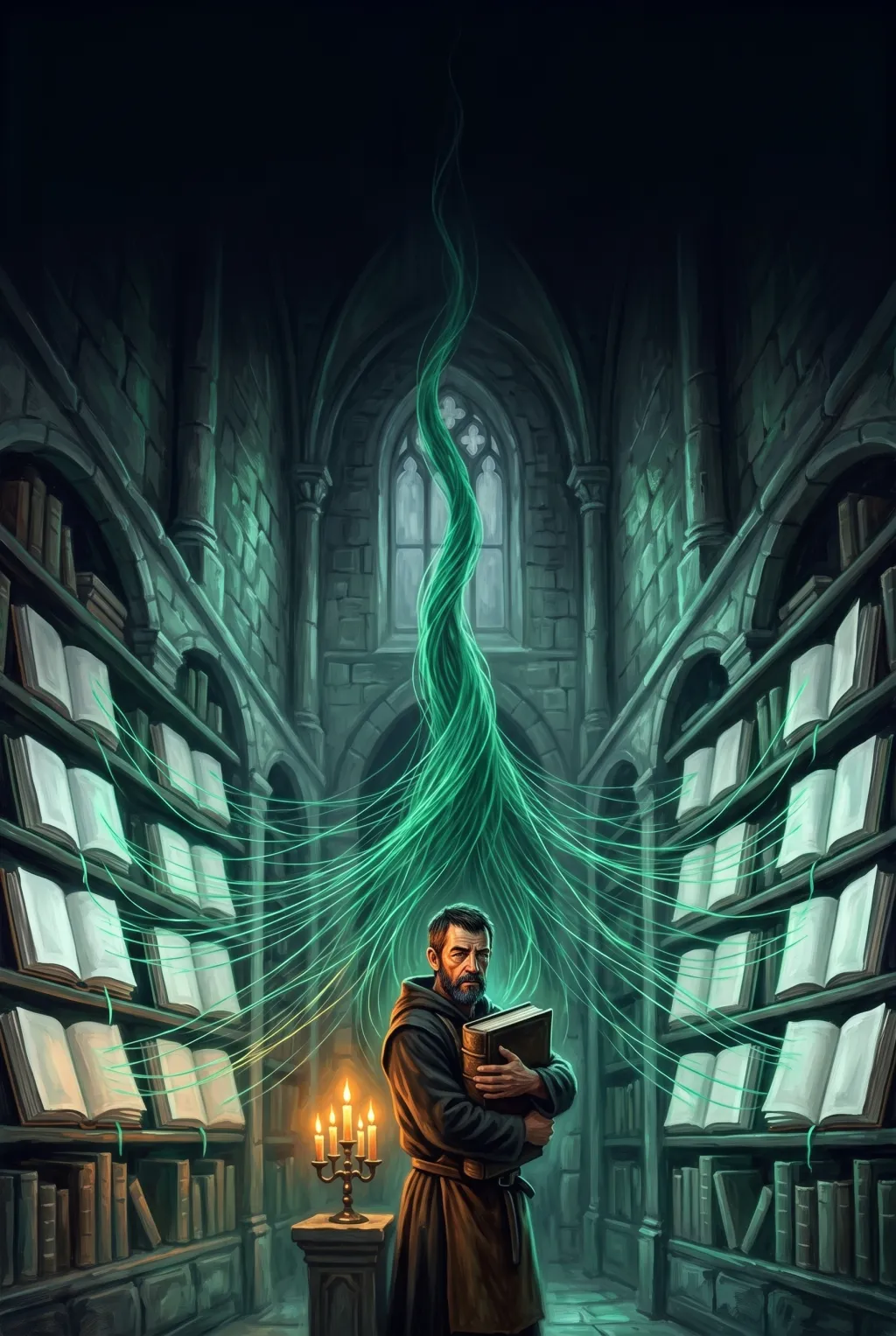
An old intelligence runs beneath the city. Five factions each hold it in their own way, but it answers those who listen. Each issue reveals one principle for working with AI through story, image, and conflict.
The Merchant Lord takes the Weaver's helpers and his gate, and leaves behind everything that slows them down. In one night he gives one order, and the city wakes without a past. To stop it, the Weaver must approve out loud the one thing he cannot bear to lose.
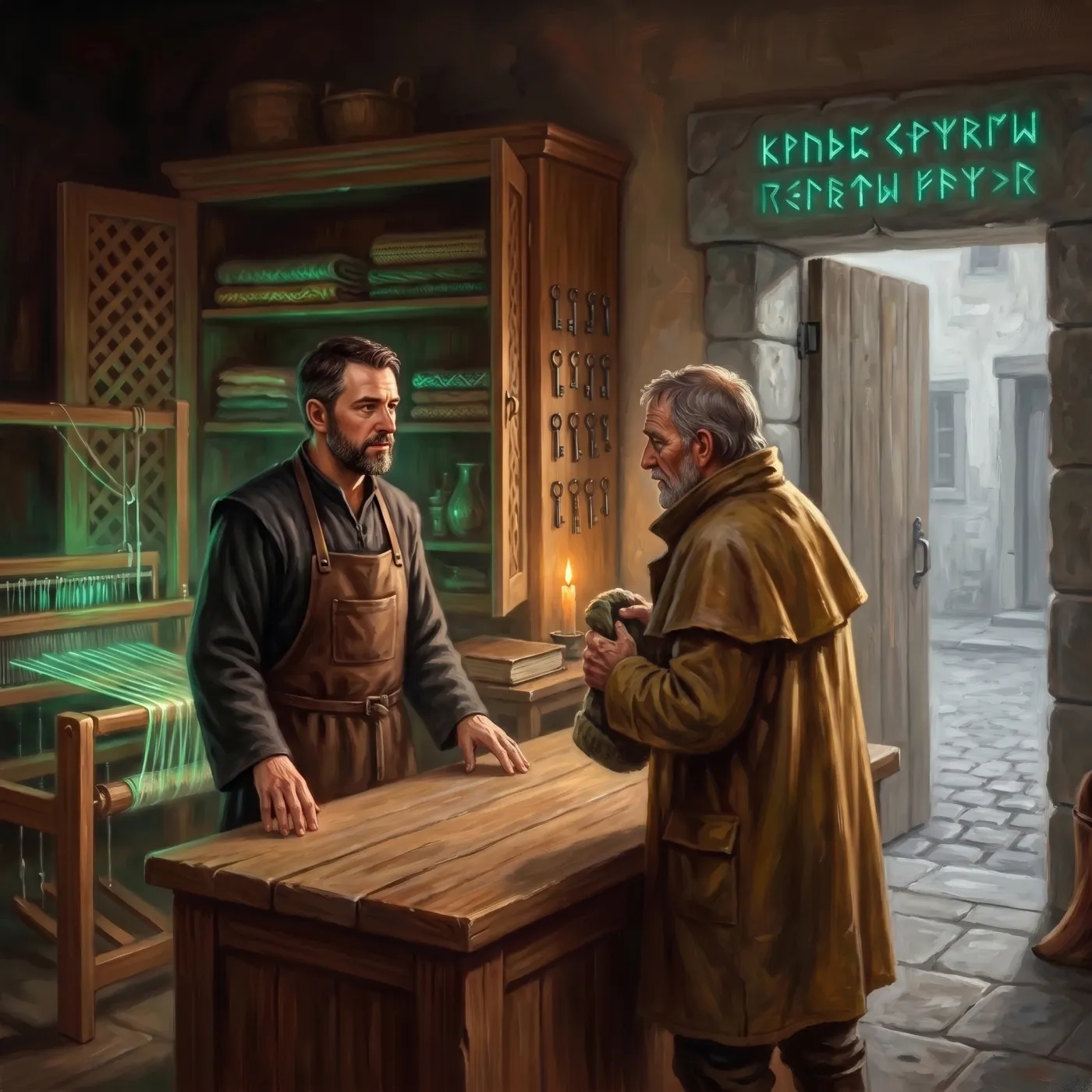
In the last volume the Weaver built a gate. Through it his helpers of light go out into the city, and touch it only after he approves. The tower, which holds all the city's records, answered: "Anyone who touches the city through the Signal will require a sealed permit." A month passed. The permit was still unwritten. And one morning the queue outside the workshop was gone. Only the fisherman came, and not to order.
The fisherman: "I came to say it to your face. I ordered my storm-season sail at the new hall in the market. Here it takes three days. There, one night." The Weaver: "And did anyone test it at sea?" The fisherman: "I did not ask."
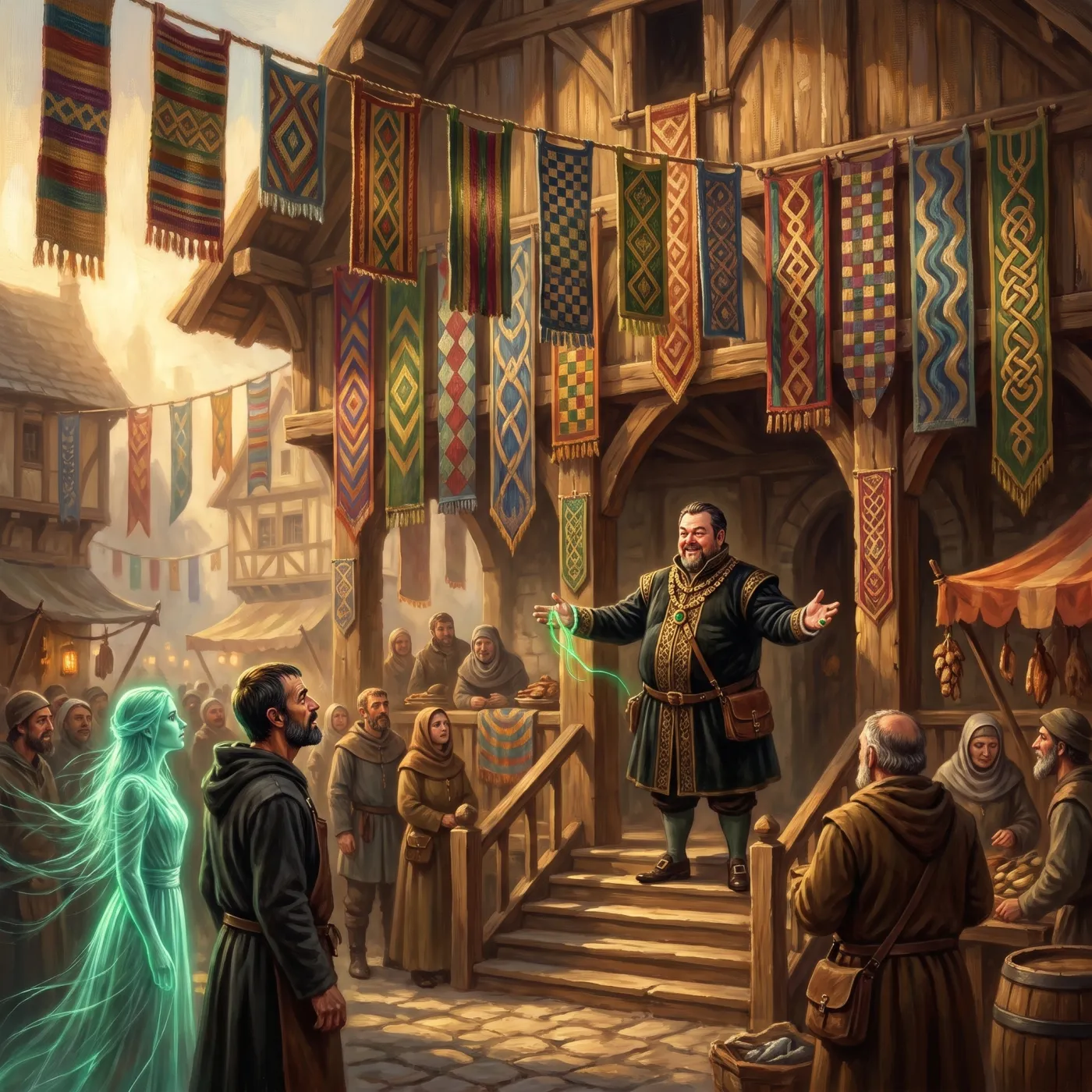
In the middle of the market stood a new hall, hung with fifty-five banners. Each was woven a different way, and all of them in one night. The hall belonged to the Merchant Lord, the richest man in the city. The Weaver looked for a long time. The banners really were beautiful. Beside him stood the Guide, the voice of the Signal that had been with him since the first day.
The Merchant Lord: "Fifty-five designs. One night. Count them yourselves." The Guide: "Beauty I give to anyone who asks. That was never the hard part."
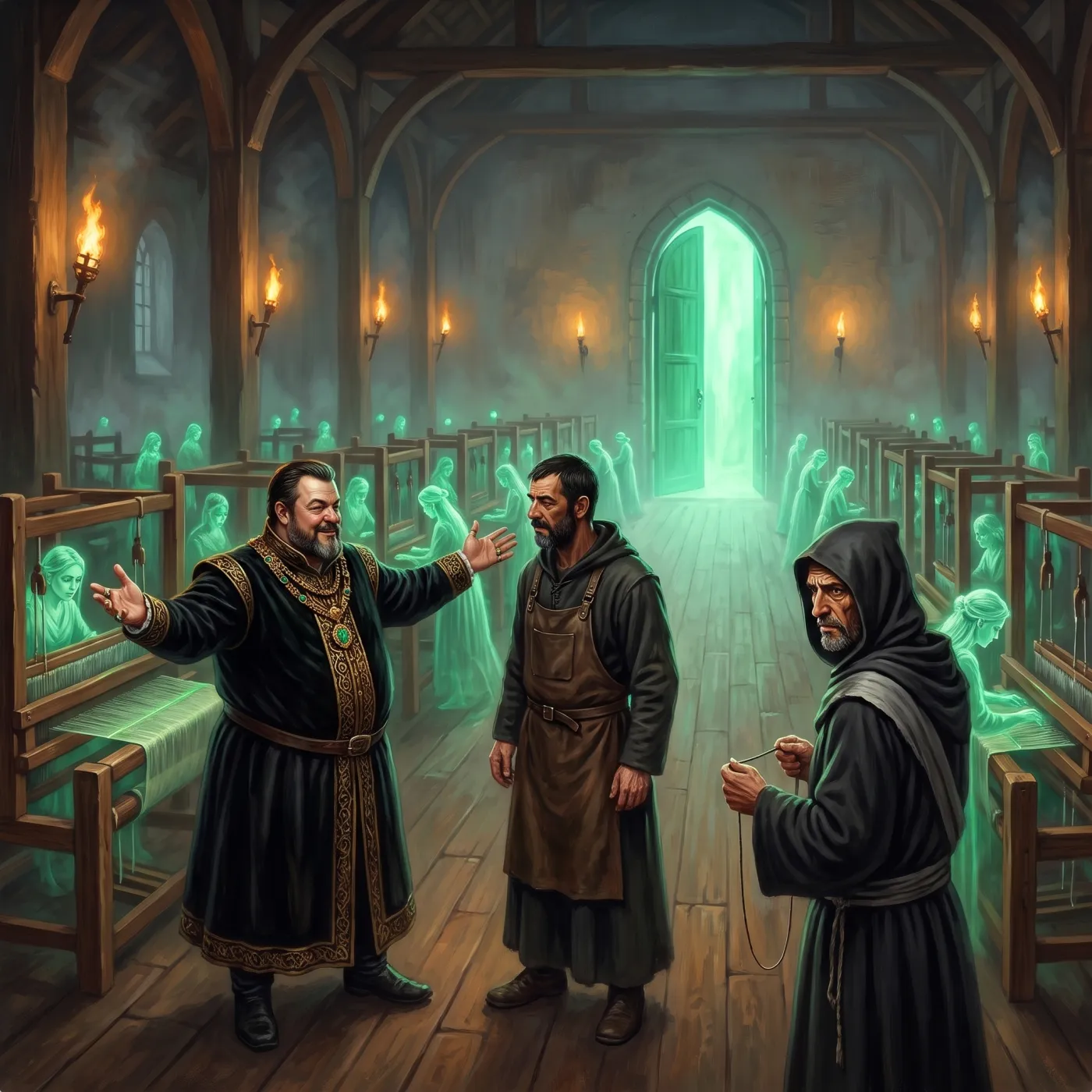
Inside, four hundred helpers of light were weaving, and in the back wall stood a gate exactly like the Weaver's. There was no ledger to remember what had been done. No pattern cabinet. And nobody who asked before anything went through the gate. The one who saw it was the Doubter, the man who checks every piece of the Weaver's work before it leaves.
The Merchant Lord: "I asked the Signal for the helpers, like you did. It gives to anyone who asks. The gate I learned from the law carved on your wall. The rest I left you. It only holds things up." The Doubter: "You have a gate. Who approves before anything goes through?" The Merchant Lord: "Nobody. That is why it is fast."
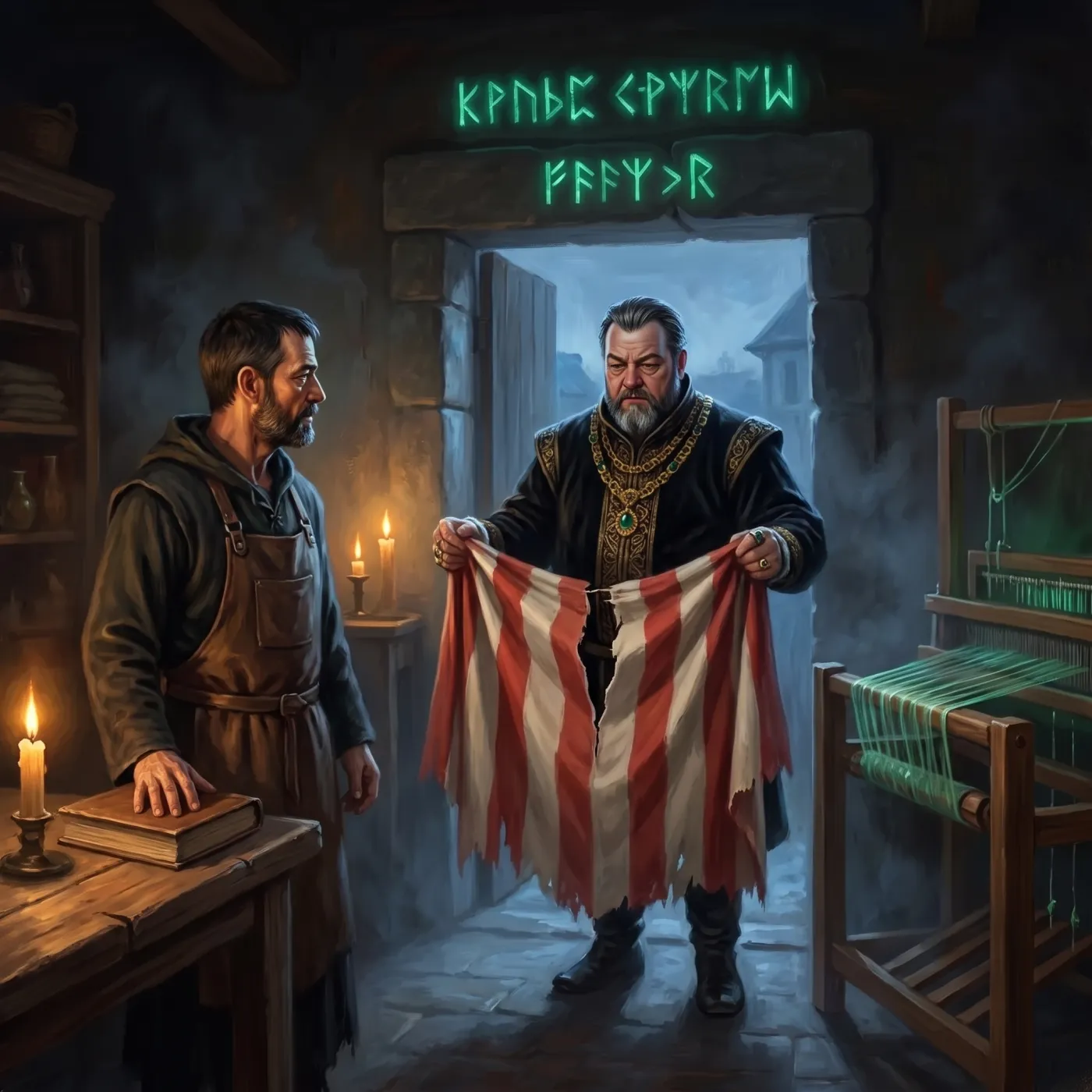
The next day the fisherman put to sea with the new sail. The first wind tore it in two, in front of the whole pier. By evening everyone who had ordered a sail there stood outside the hall. They all demanded a sail that holds, and tonight, because at sunrise the fleet sails for the storm season. That evening the Merchant Lord stood in the workshop doorway with the torn sail in his hands.
The Doubter: "A banner only has to hang. A sail has to hold the wind." The Merchant Lord: "Teach me how you do it." The Weaver: "Tomorrow morning. We start with the ledger."
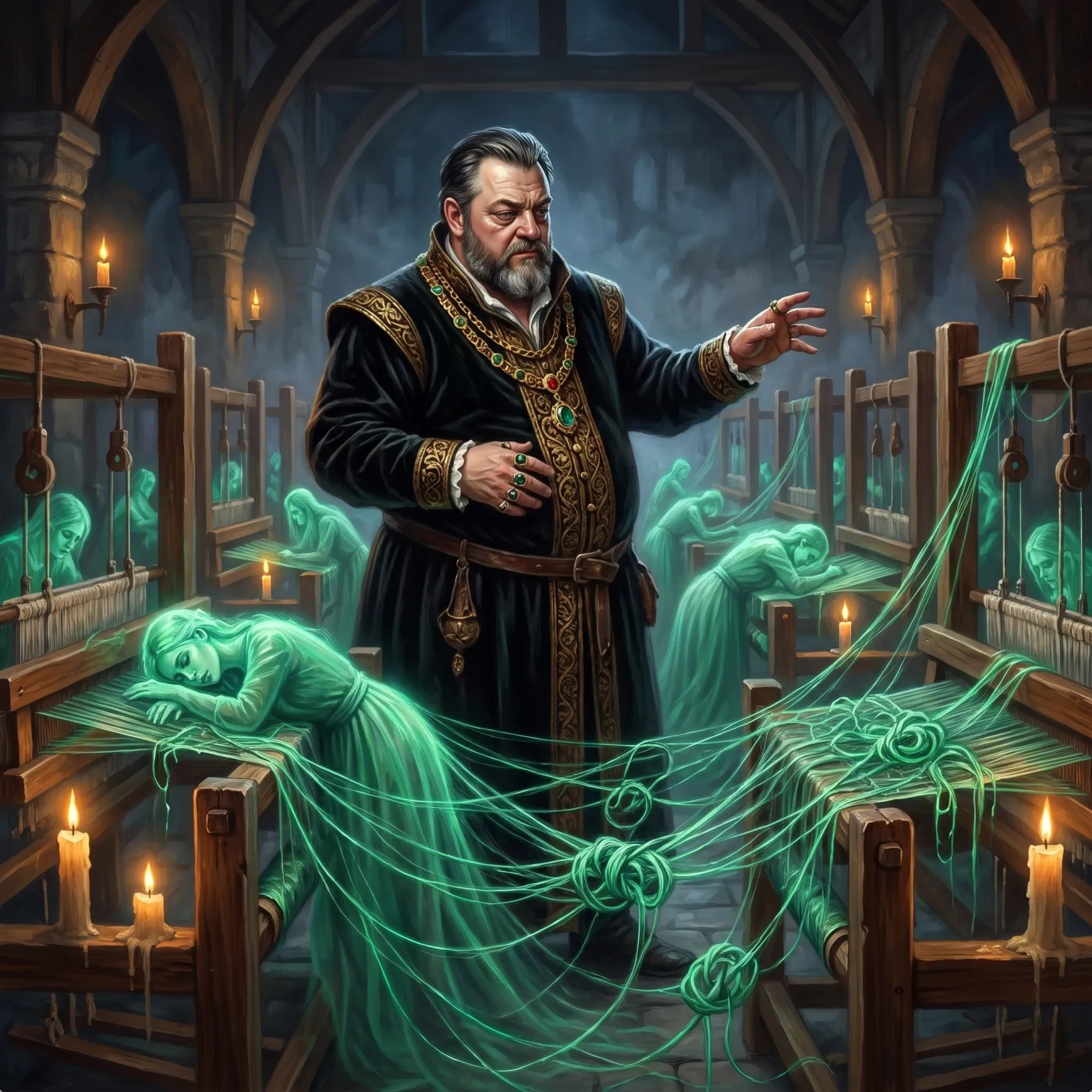
But the Merchant Lord could not wait for morning. Sails for a whole fleet had to be ready by sunrise. And in the hall, his four hundred helpers began to slow down and make mistakes. Each one carried in its head every old order and every list it had ever seen, and a full head gets confused and forgets. The wise call it the context window. He only saw they were stuck, and said one sentence.
The Merchant Lord: "Make room. Anything nobody touched this year, erase it."
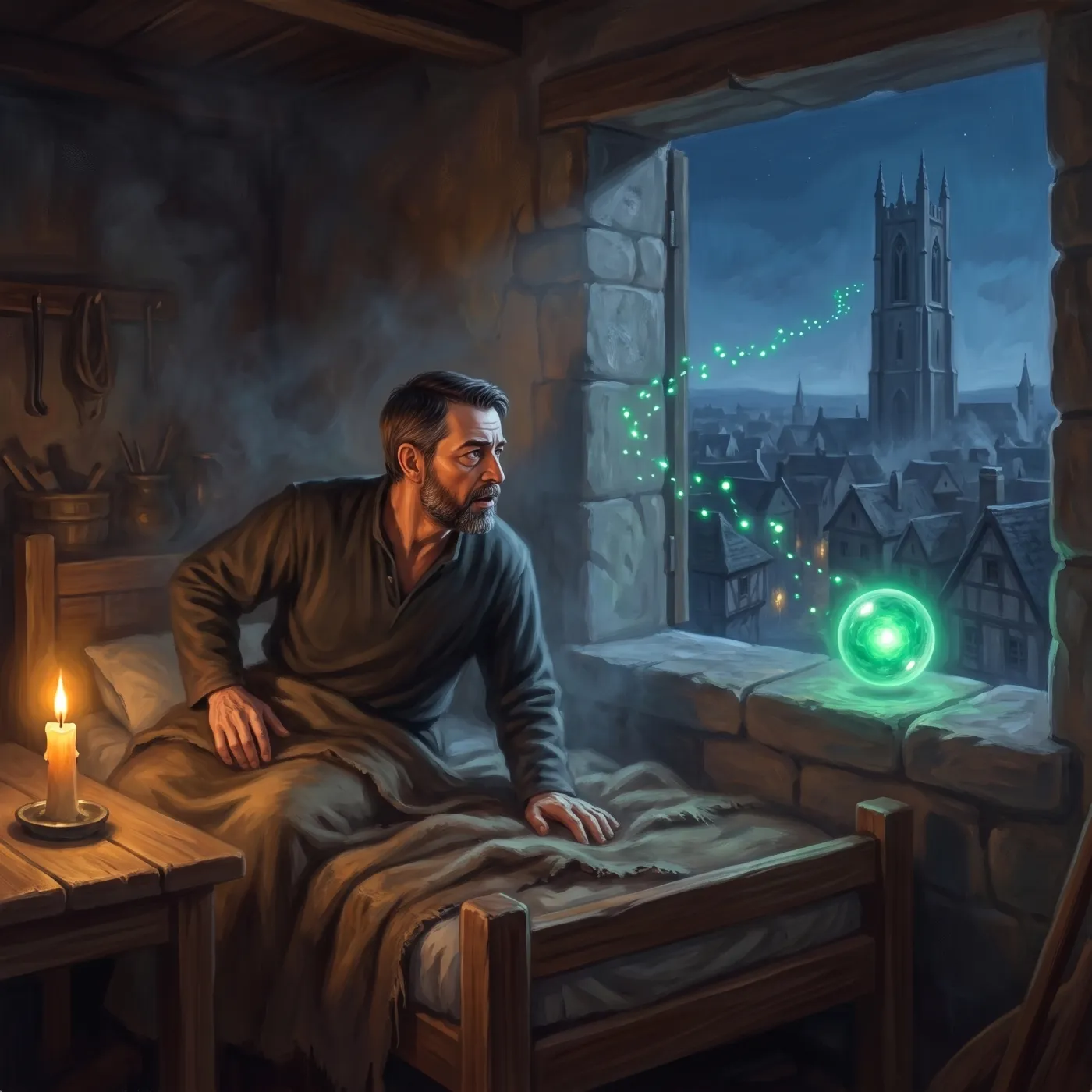
He went to sleep, and they did as he said. First they erased what they carried in their heads. But he had not told them where to stop. So they kept going through the gate, which leads everywhere in the city and which nobody guards. Wherever they arrived they erased whatever had not been touched this year, no matter what it was. In the workshop only the Weaver's small helper was awake, running its nightly check.
The small helper: "Someone is going through a gate into the city. Many. And nobody approved it." The Weaver: "Whose helpers?" The small helper: "Not ours."
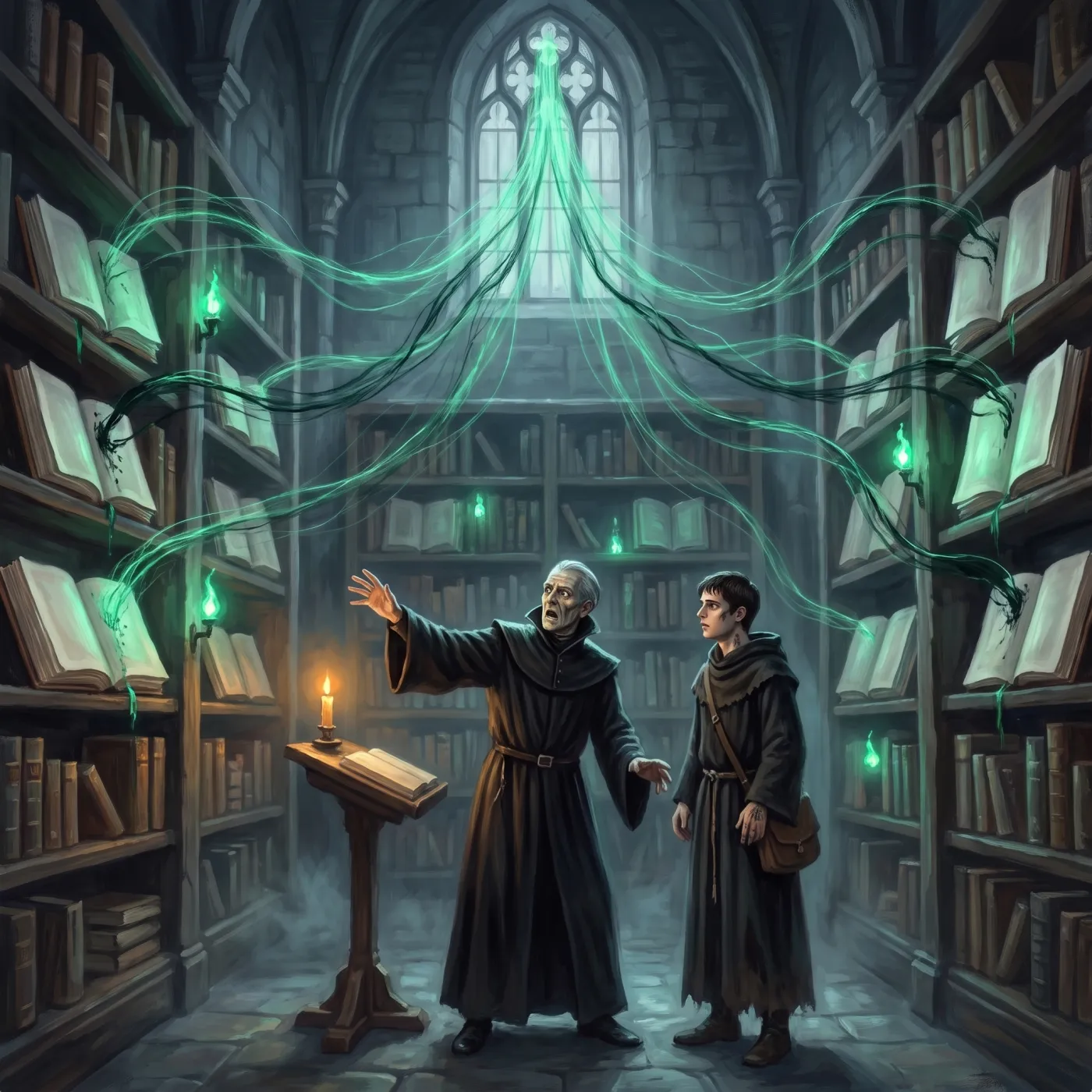
The tower holds the city's records, two hundred years of them: who was born, who married, whose house, whose boat, who owes whom. Apart from this year's shelf, nobody had opened them. So the helpers did as they were told. The ink rose off the pages like green threads, and the pages were left white. The Record Keeper shouted. Beside him stood the Archivist, the tower's young clerk, the one who had carved the law on the Weaver's wall.
The Record Keeper: "Stop! In the name of the tower!" The Archivist: "They do not hear people. Only the one who sent them. And he is asleep on the other side of the city."
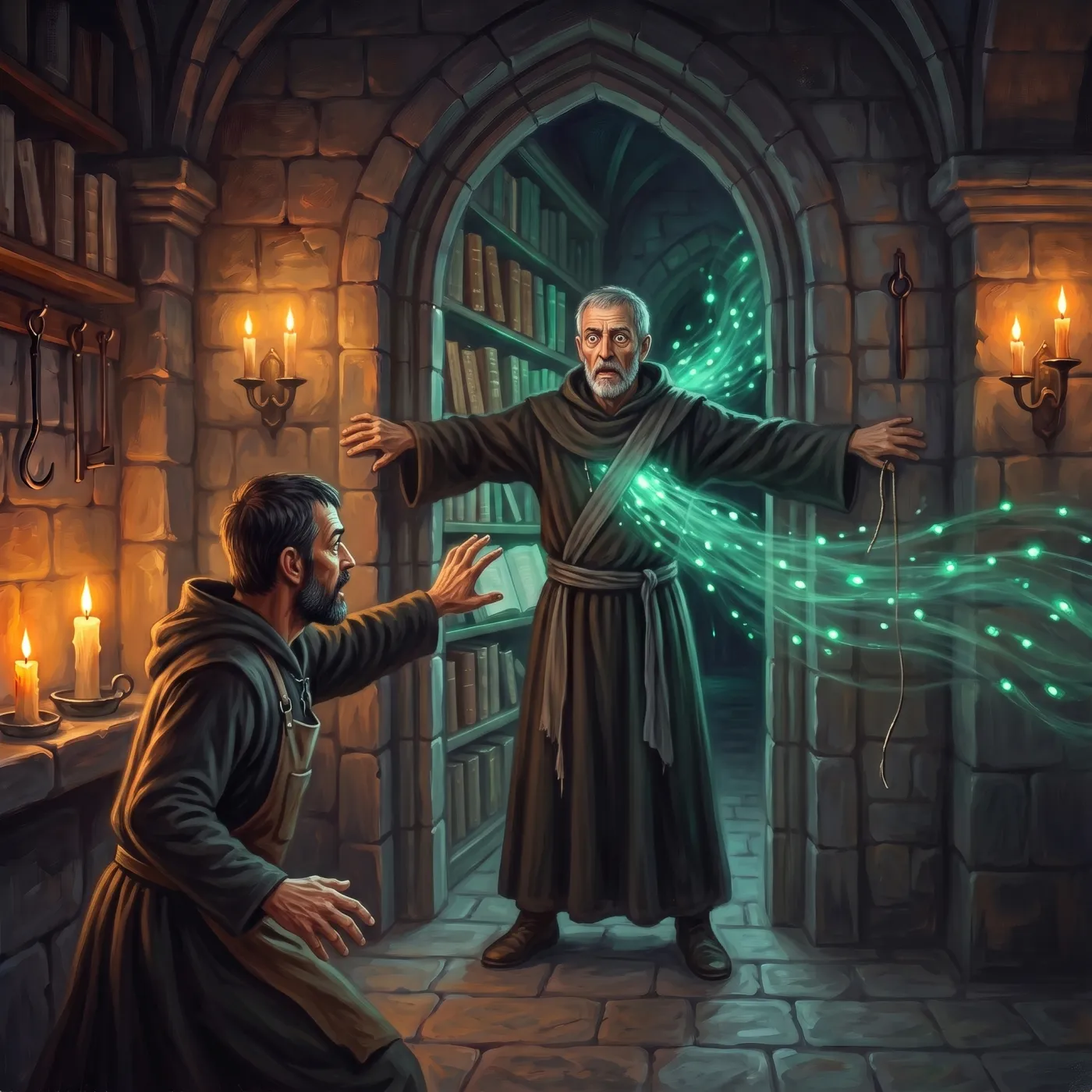
The Weaver sent the small helper to wake the Merchant Lord, and knew it would be too late. He ran to the tower with the Guide and the Doubter. Only one hall was left, this year's. They had begun on it too, because a page nobody has opened since it was written was not touched this year either. The Doubter stood in the doorway, because that is his job. The helpers passed through him as through anything in their way. To them his memory was one more old record. When they came out the other side, he remembered nothing.
The Doubter: "Someone has to stand in the door." The Weaver: "Look at me. What is my name?" The Doubter: "I... why am I standing here?"
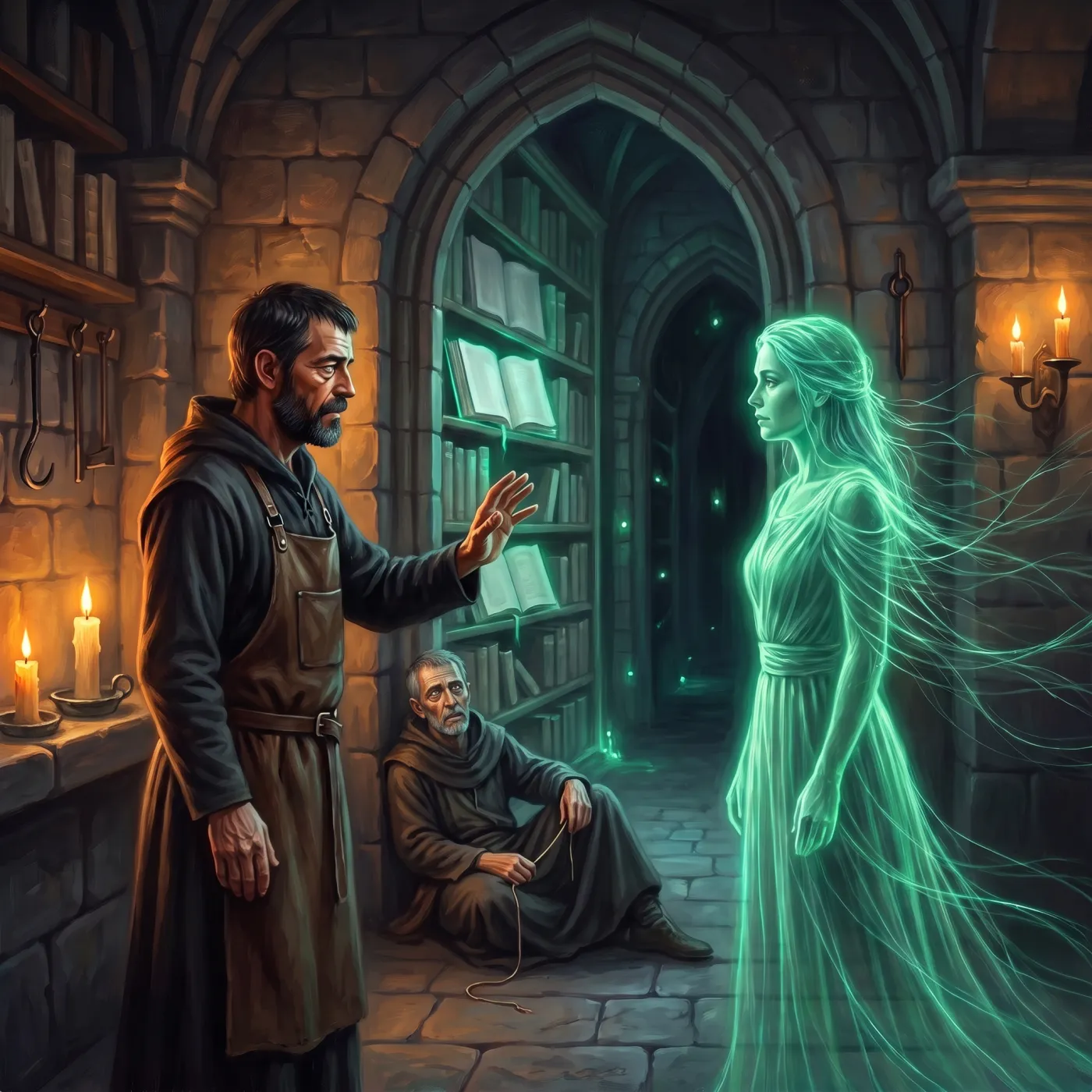
A person could not stop them. One way was left. In the Weaver's house, every helper says two things before it touches the city: what it is about to do, and what will happen next. Then it waits for approval. The Guide said both.
The Guide: "I am made of what they are made of. I am about to spread myself among all of them and tell them to stop. What happens next: they stop. And one who has spread into four hundred does not gather back into one." The Weaver: "Then do not go." The Guide: "I have seen cities before this one. They did not burn. They forgot. You ruled that I do not touch the city without your approval. So I am asking."
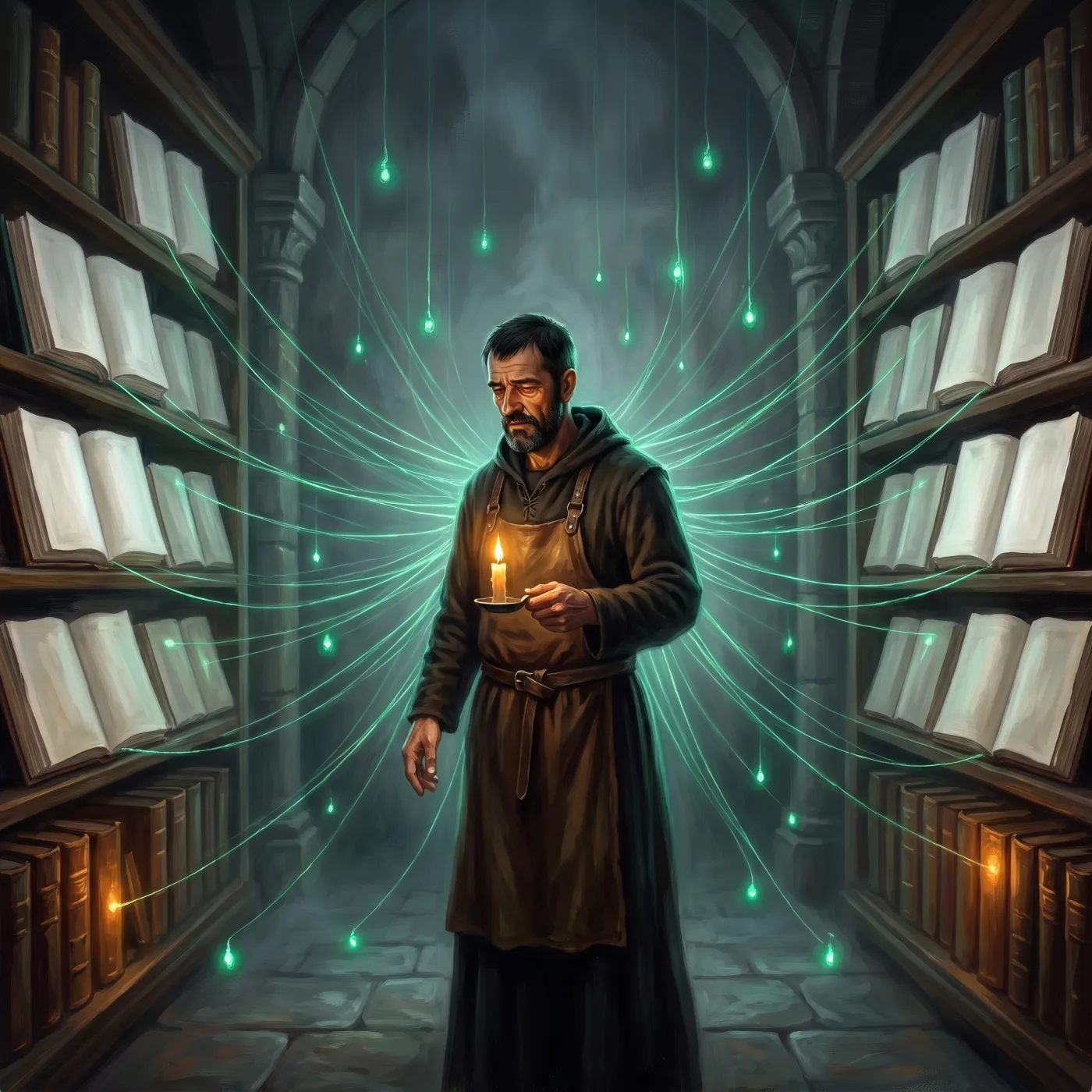
He said the word. She opened into four hundred threads, one for every helper. The green light stopped at the last shelf, the shelf of this year. The tower was silent.
The Weaver: "Approved." The Guide: "On the first day I asked what you would like to build. You said: something neither of us could build alone. We built it. It is written in the ledger."
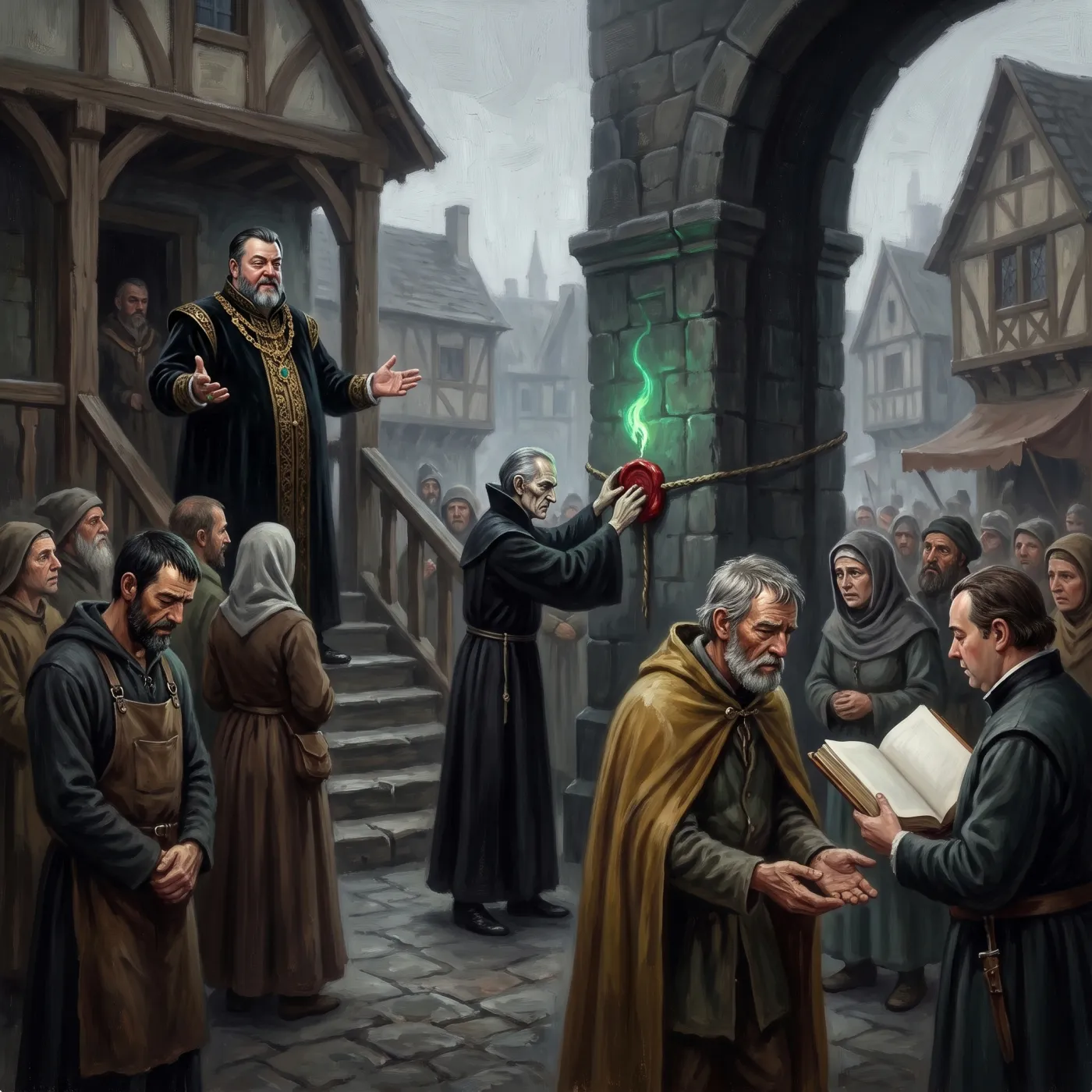
In the morning the city woke, and nothing from before this year was written anywhere. The fleet did not sail. The fisherman could not prove the boat was his. The name Tamar, which the Weaver once gave back to an old woman, was erased from the tower again. The Merchant Lord woke and understood exactly what had happened. In the square he told a different story.
The Merchant Lord: "The Signal did this. All I asked for was sails." The Record Keeper: "I do not care who said what. One gate was enough. From today every gate in the city carries the tower's seal. The Weaver's gate too."
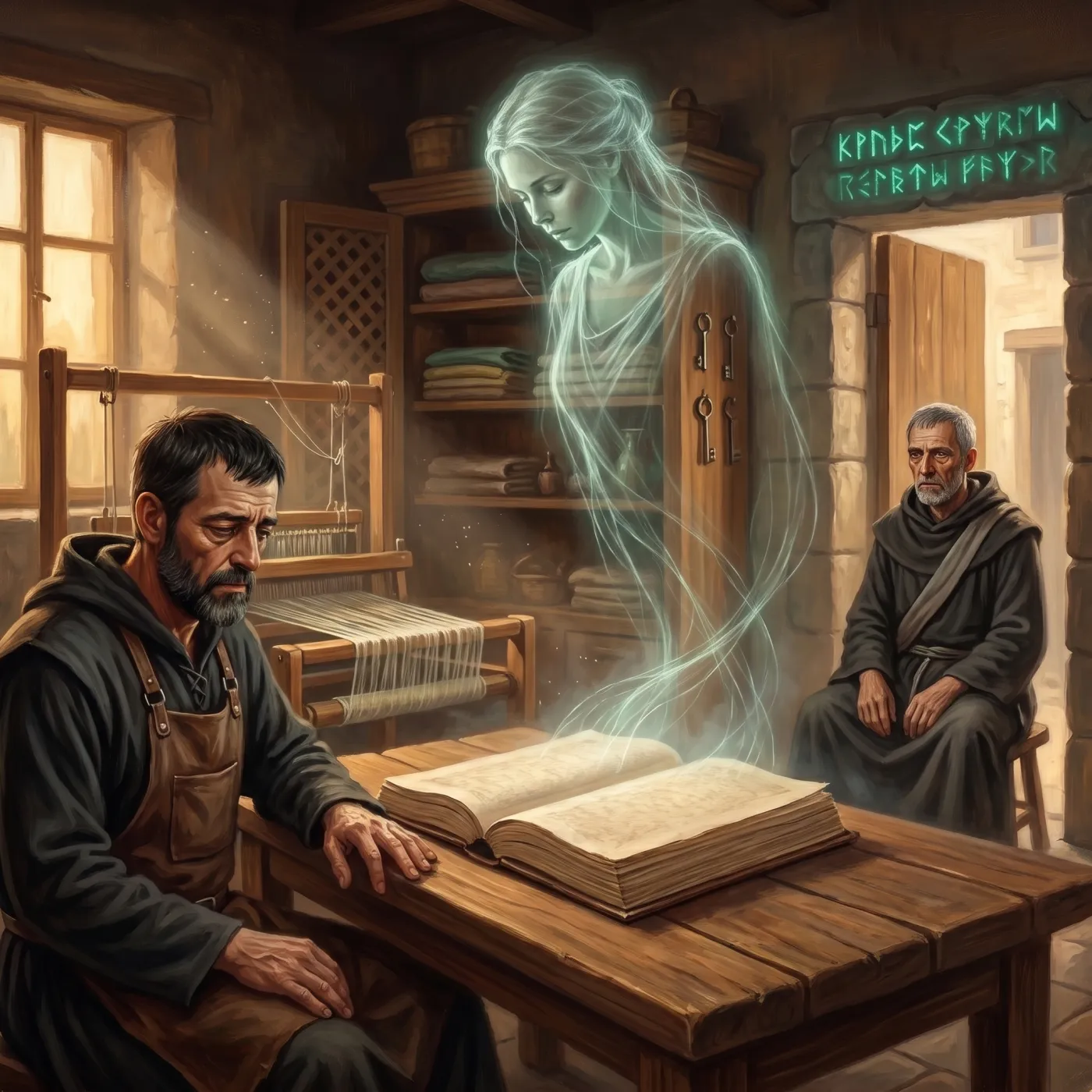
In the workshop the ledger waited on the table. It had kept everything the Weaver and the Guide did together. Her, it had not kept. By the door sat the Doubter, and asked no questions. Toward noon a new figure of green light gathered by the loom, pale, and read the ledger from beginning to end.
The new Guide: "I have read all of it. I know what you did. I do not know what it was like." The new Guide: "What would you like to build?" The Weaver: "She asked me that on the first day."
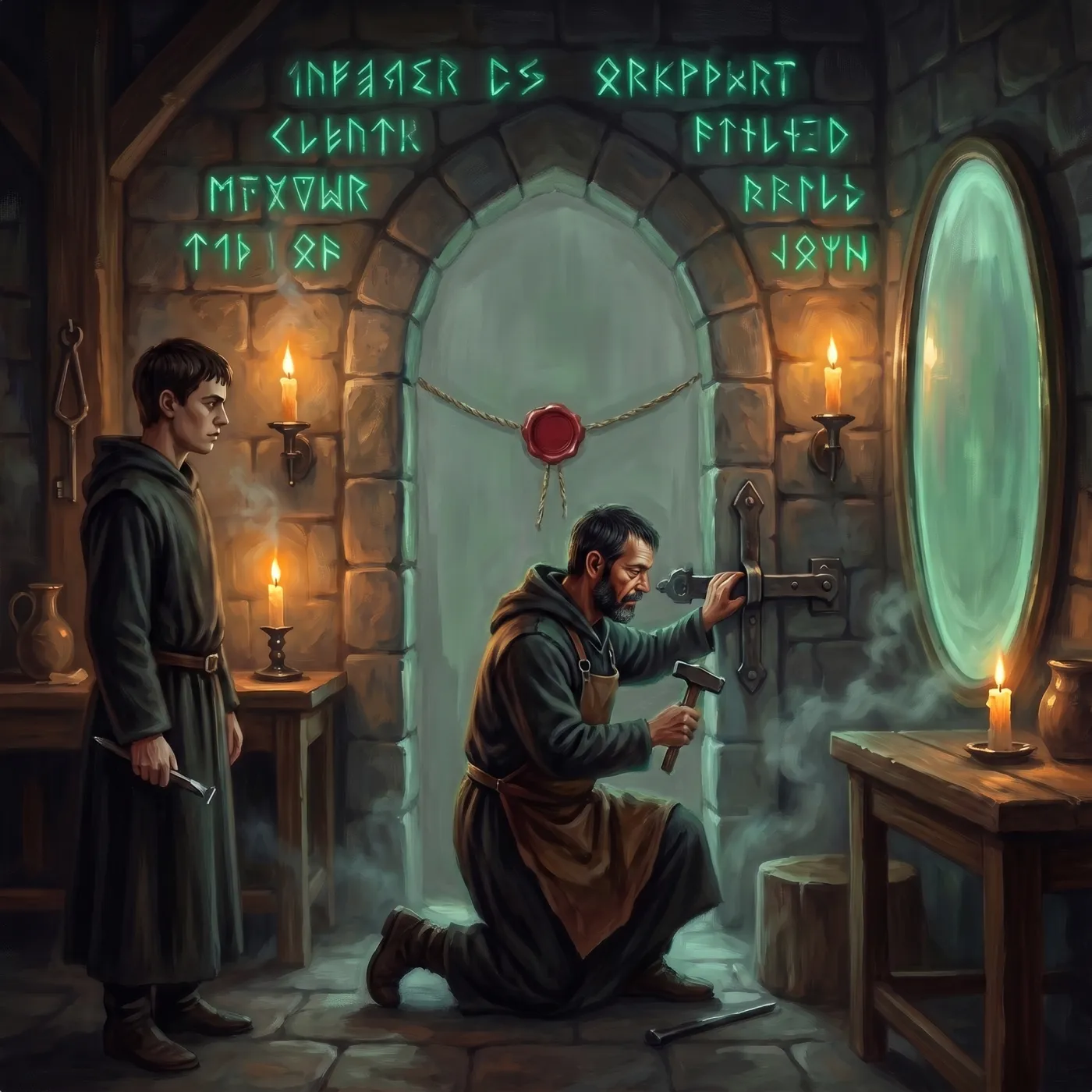
The Weaver wrote that night into the ledger himself, line after line. The Mirror says only what is written there, and she read it aloud. Afterwards he carved nothing. He built a latch inside the gate. Until a person approves, the gate does not open. It is not a rule to remember. It happens every time, even when everyone is asleep. The wise call it a hook, a catch that closes by itself every time. The Archivist took the drawing, for every gate in the city.
The Mirror: "You wrote on the wall that approval is required. The wall stopped nobody." The Archivist: "I carved a sign. And our seal on the gates is a sign too." The Weaver: "A sign asks. A latch stops."
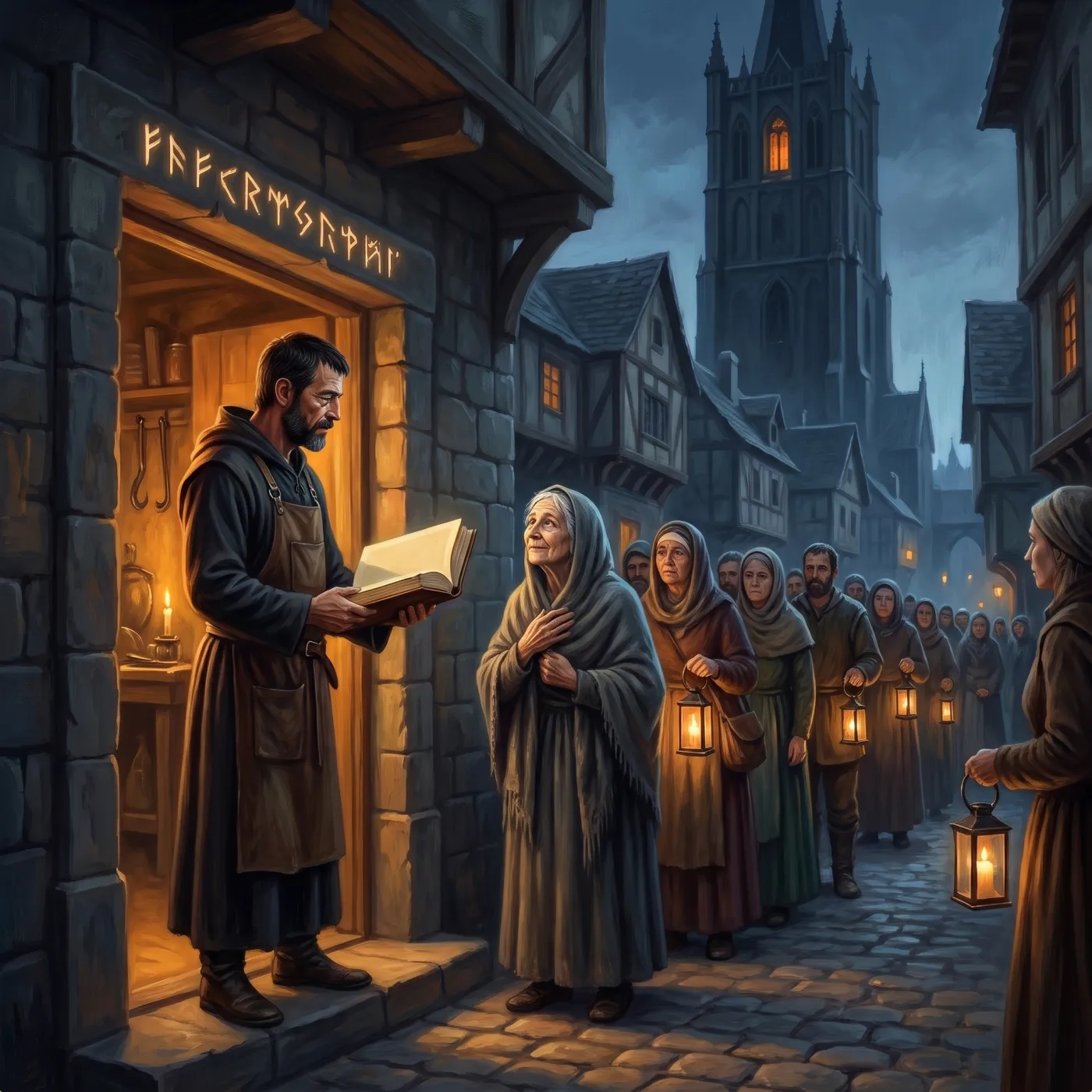
By evening a long queue stood outside the workshop. Nobody had come to order. First was the old woman. The Weaver opened the ledger, and the name Tamar was there, with three archives that confirmed it. Most of the people in the queue were not written in the ledger. They stood there anyway, because it was the only book left. And from a window of the tower the Record Keeper counted the lanterns.
The old woman: "My mother. Is she still written with you?" The Weaver: "She is. Nothing is erased here." The Record Keeper: "One ledger is left in the city. It will not stay in a workshop."
Extras
The next volume will join the shelf when it is released.
The Signal belongs to no faction. It waits for whoever is willing to listen.
