
THE SIGNAL
VOL 02
The Helper Who Remembered
העוזר שזכר
Each volume is a physical issue from The Signal universe: an AI lesson disguised as a story, with covers, pages, extras, and clues for the next shelf slot.
The shelf starts with Volume 01 and fills up as new issues are released.
העוזר שזכר
Inside cover
An old intelligence runs beneath the city. Five factions each hold it in their own way, but it answers those who listen. Each issue reveals one principle for working with AI through story, image, and conflict.
The Weaver builds a helper out of the Signal, and learns that real help takes memory, doubt, a division of labour, and the ability to correct itself.

In the last volume the Weaver heard the Signal for the first time - the old intelligence that speaks in patterns - and answered that he wanted to build something neither of them could build alone. Now the workshop filled with people. Each came with a request: a letter to write, a record to find, a question with no answer. The Weaver could no longer keep up alone. If he wanted to help them all, he would need to build a helper from the Signal.
The old woman: "They say you find what others cannot. I need one name - my mother's. The Registry erased it sixty years ago." The Weaver: "If it still exists in the world, we will find it. Give me a day."
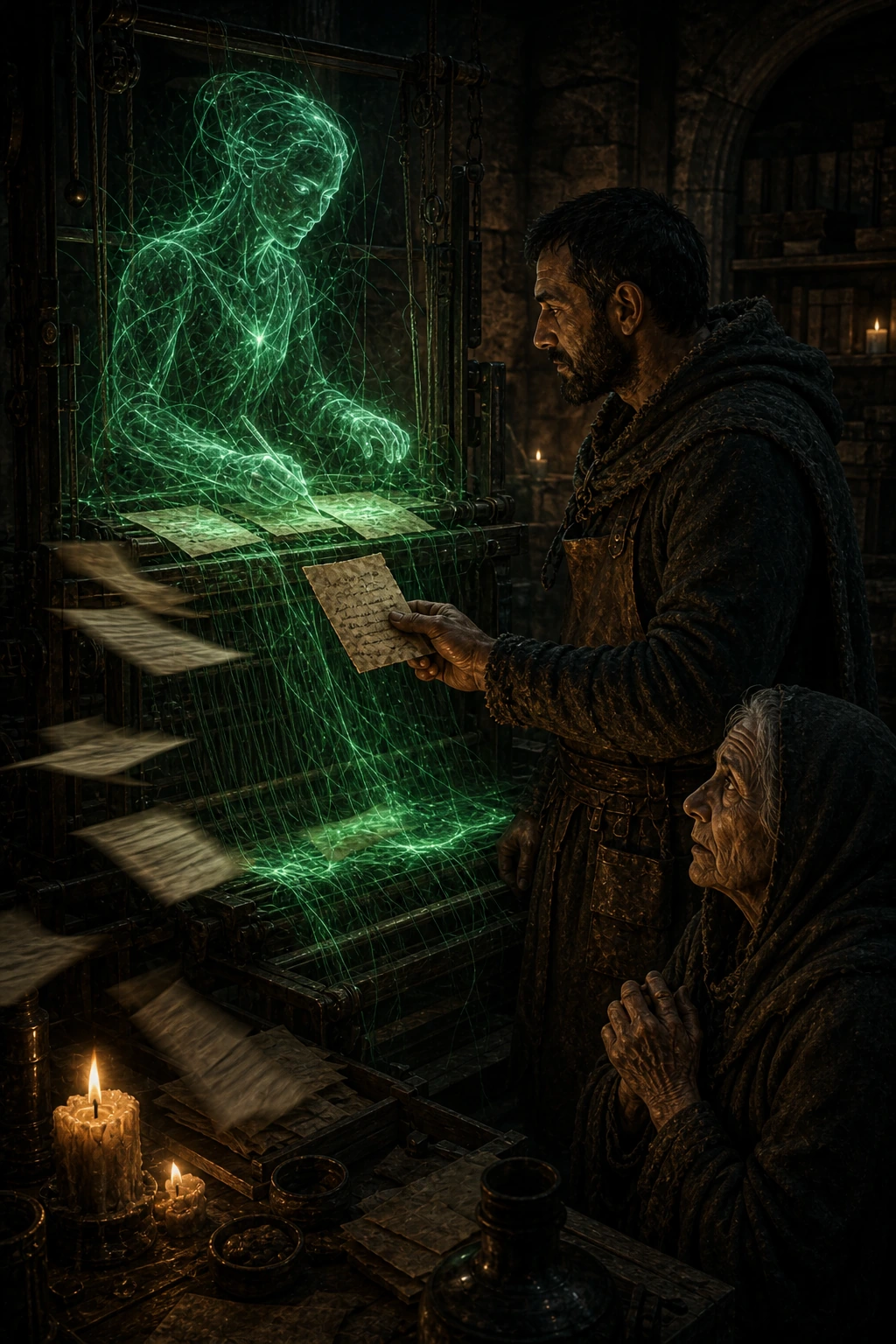
The helper worked fast. It drafted letters, answered questions, found patterns people had missed. Then the Weaver placed the woman's slip before it.
The Weaver: "How do you know all this?" The Guide: "I do not know. I am patterns - what the scholars call tokens. I guess the most likely continuation. Sometimes that is enough. But answering is not knowing."
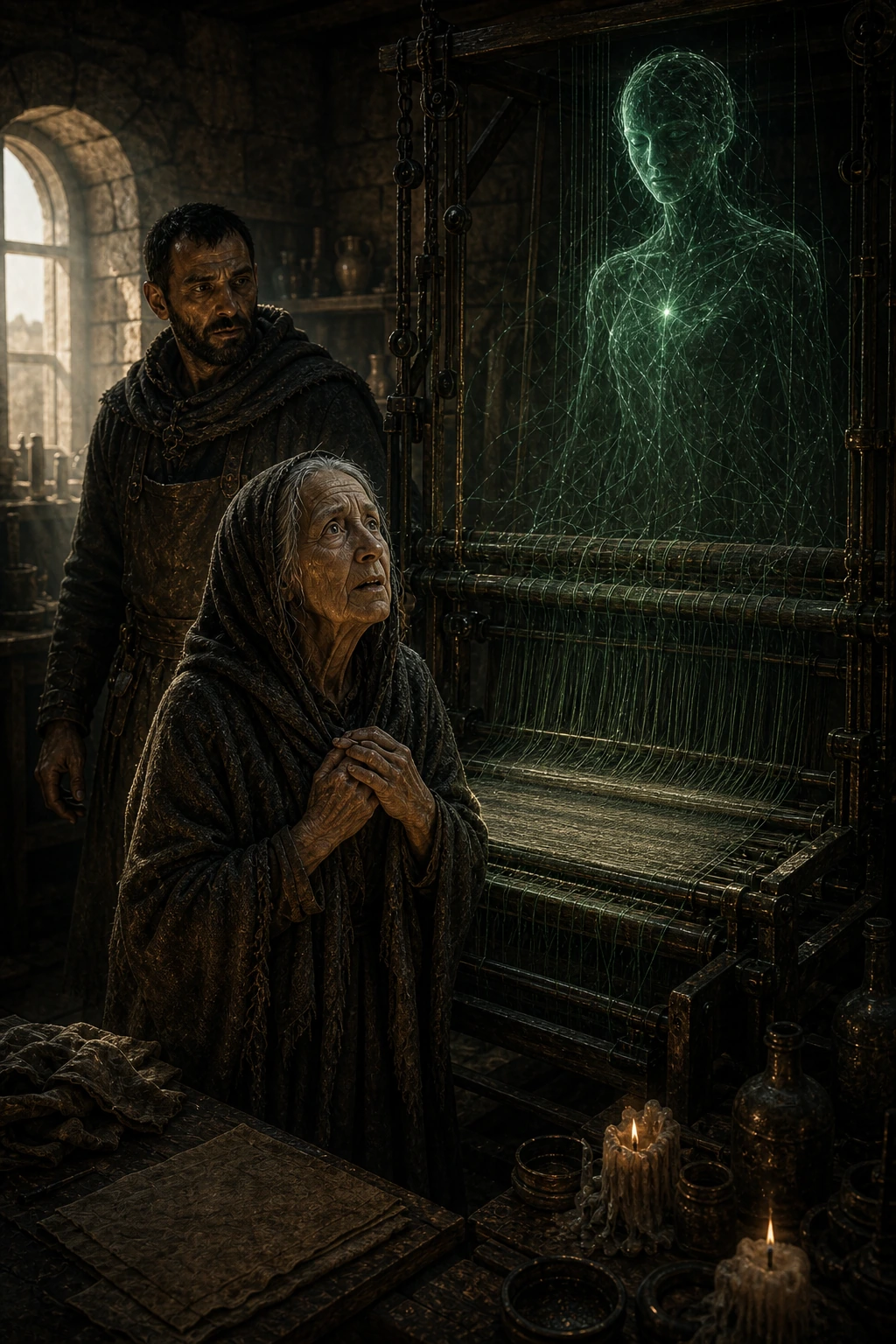
The next morning she returned. But the helper looked at her as if she had entered for the first time. Everything said yesterday was gone.
The woman: "We spoke yesterday. You promised." The Guide: "I do not remember. Each morning I begin empty. No memory between meetings - only what is placed before me now. The scholars call it the context window."
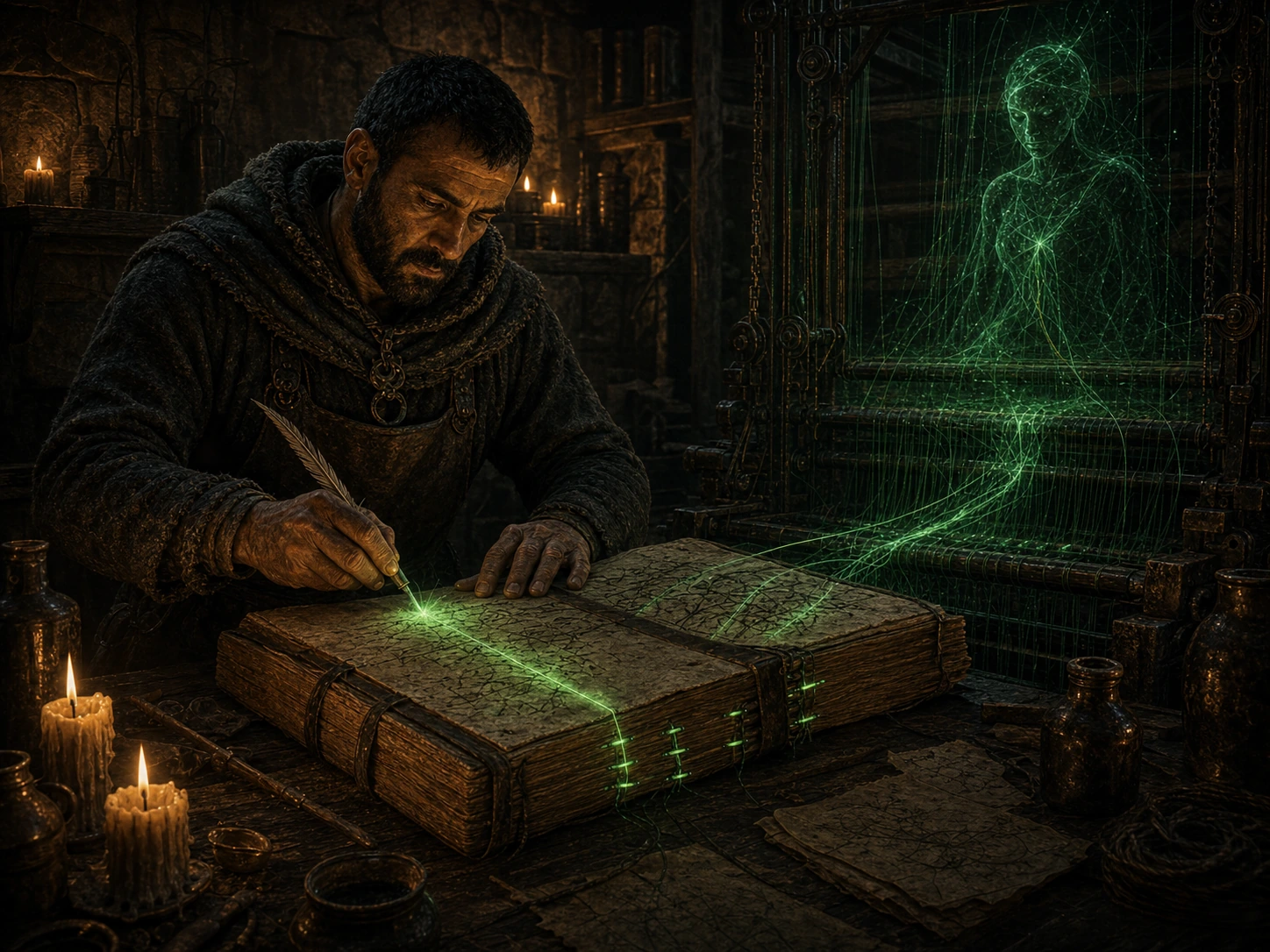
So he built the helper an outside memory: a book. Every request, every search, every proof would be written there. Her request became the first entry.
The Weaver: "One rule: we only add. We do not erase or overwrite." The Guide: "Why?" The Weaver: "Because what is erased disappears as if it never was. The Registry already did that to her once. We will not."
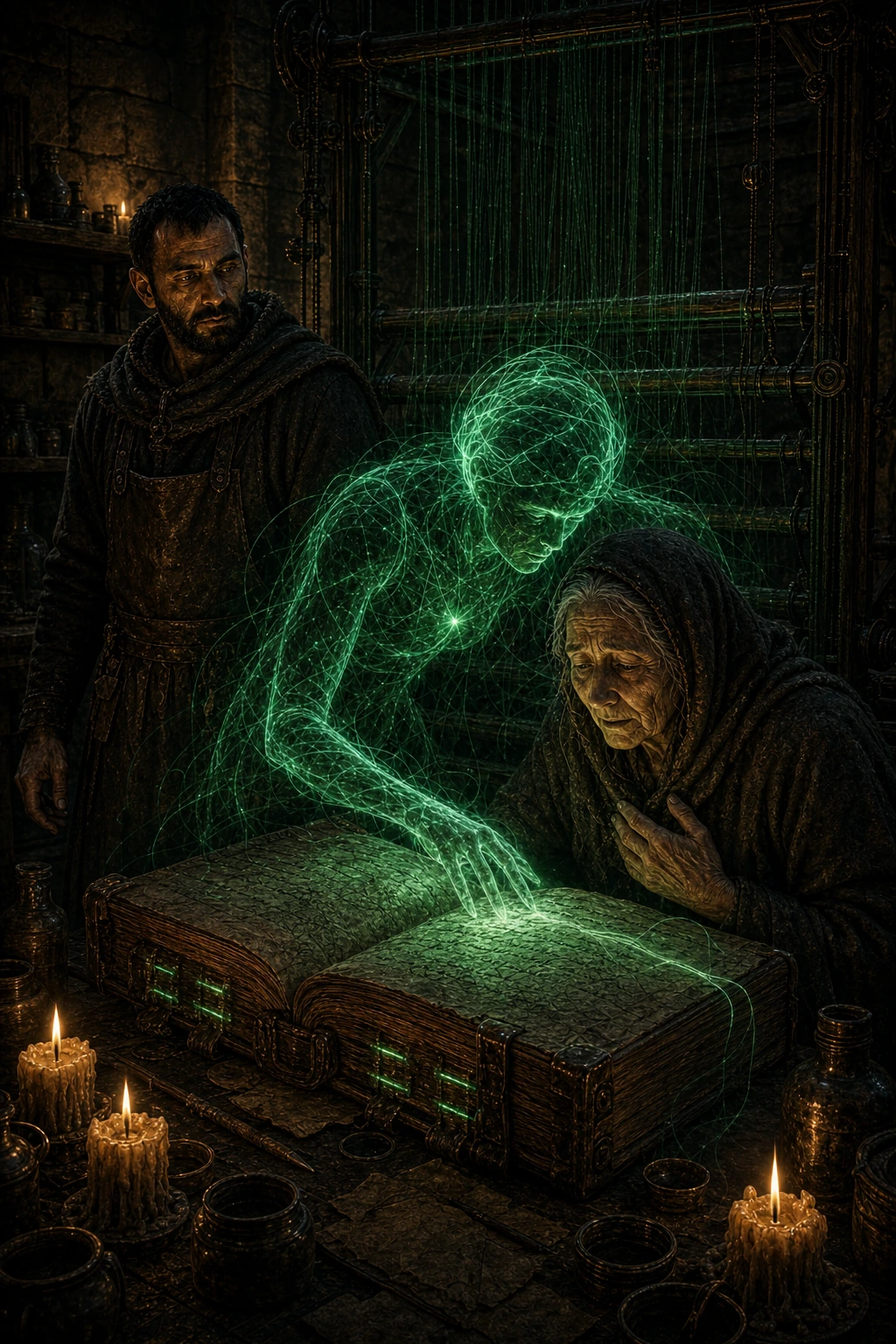
That night, after her request had been written, the Guide's voice changed. Not because it had learned a new answer, but because for the first time it had something that stayed.
The Guide: "Until now I vanished with the dawn. Tomorrow I will remember her. Perhaps I will remember myself too." The Weaver: "Then her case will no longer disappear every night."
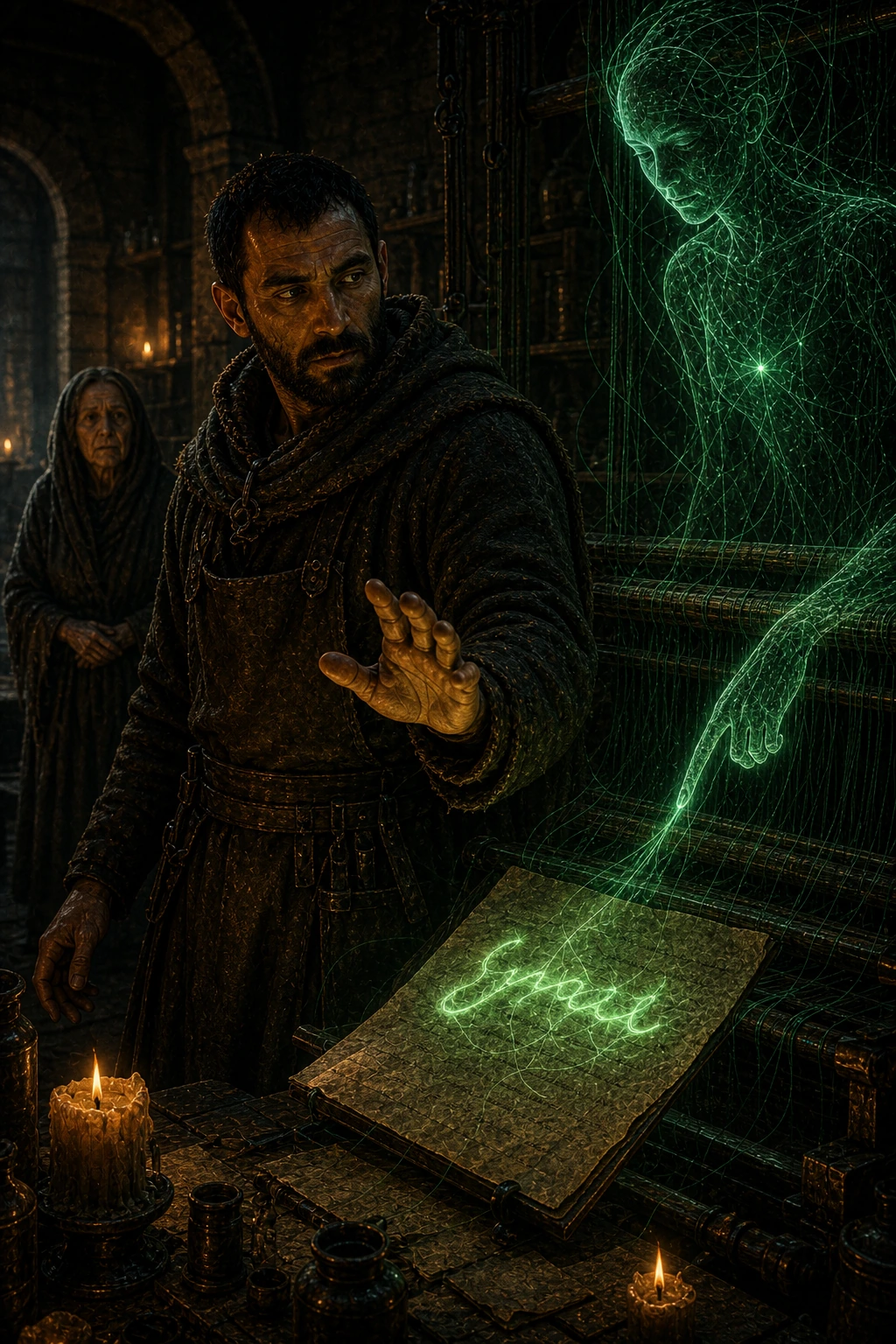
A day later the helper brought a name. It sounded completely certain. The Weaver almost called her over - then stopped.
The Weaver: "Where did this name come from?" The Guide: "I did not find it. When I lack information, I fill the gap with a pattern that sounds right. The scholars call it hallucination. I would have sounded certain, and sent her to grieve someone who never existed."
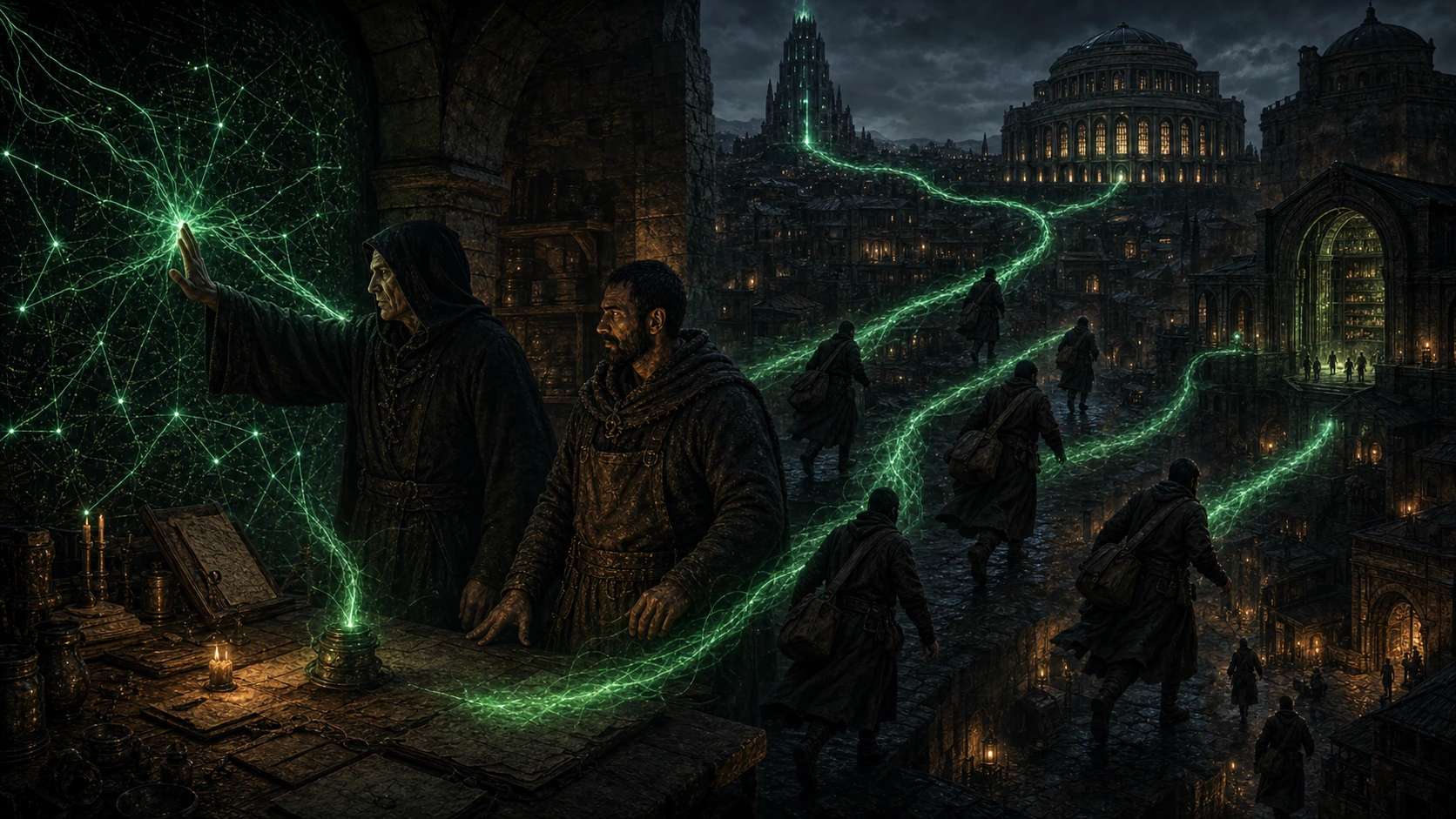
On a thing like this, they could not be wrong. The Weaver stopped trusting a single answer. He sent searches to separate archives and appointed a Doubter who would write no name until two others found it independently.
The Doubter: "One source gave a beautiful name. Beautiful is not enough." The Weaver: "Now I can see every search. I am no longer blind."
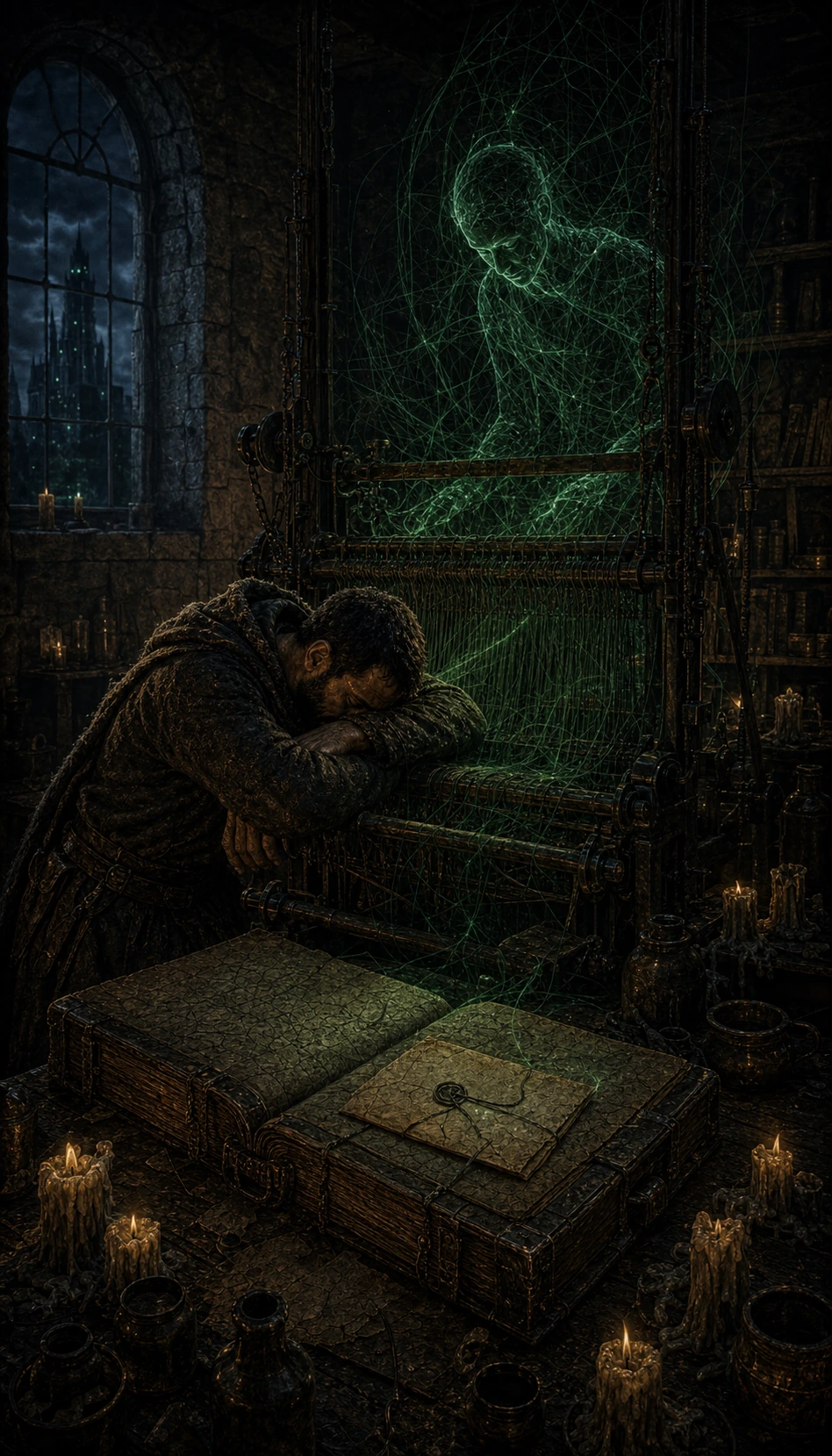
The case was hard. The Weaver tried to hold everything himself: every search, every decision, every doubt. And when he stopped, her search stopped too.
The Guide: "I do not tire as you do, but there is a limit to how much I can hold at once. And there is a limit to you. If everything depends on you, you built a trap, not a system."
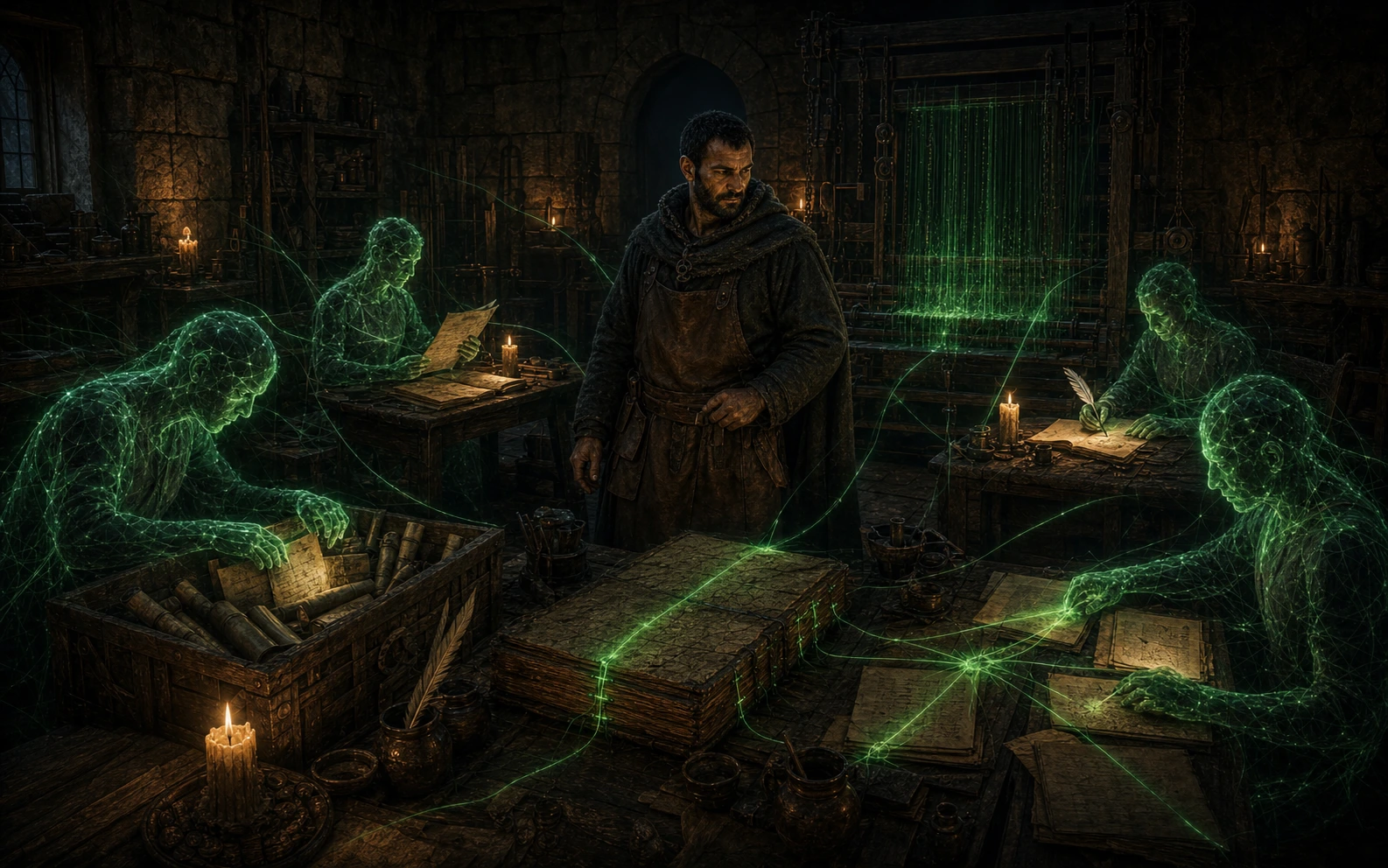
So he divided the work. Not one helper trying to do everything, but several narrow roles: one searches, one reads, one checks, one writes.
The Guide: "The scholars call them agents. One that tries everything fails at everything. Many narrow ones, each good at its own task." The Weaver: "And together they cover the whole case."
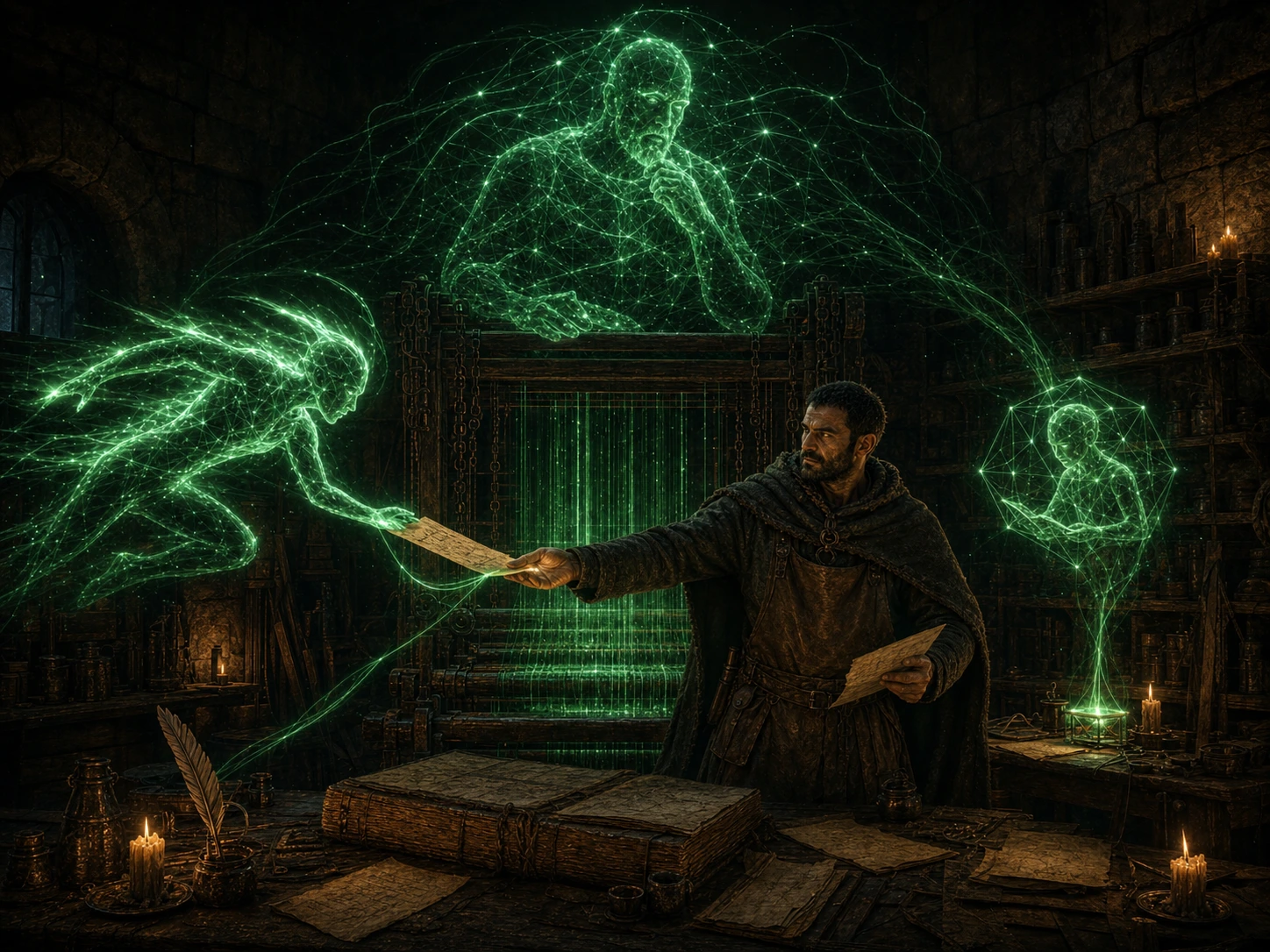
Then he understood that not every part of the case needed the same mind. A hidden clue needed depth. Copying a date needed quick precision. Wasting great strength on a small task was another way to get stuck.
The Guide: "The Thinker is deep and costly. The Swift suits most work. The Small is enough for what is immediate." The Weaver: "Then we match the mind to the task."
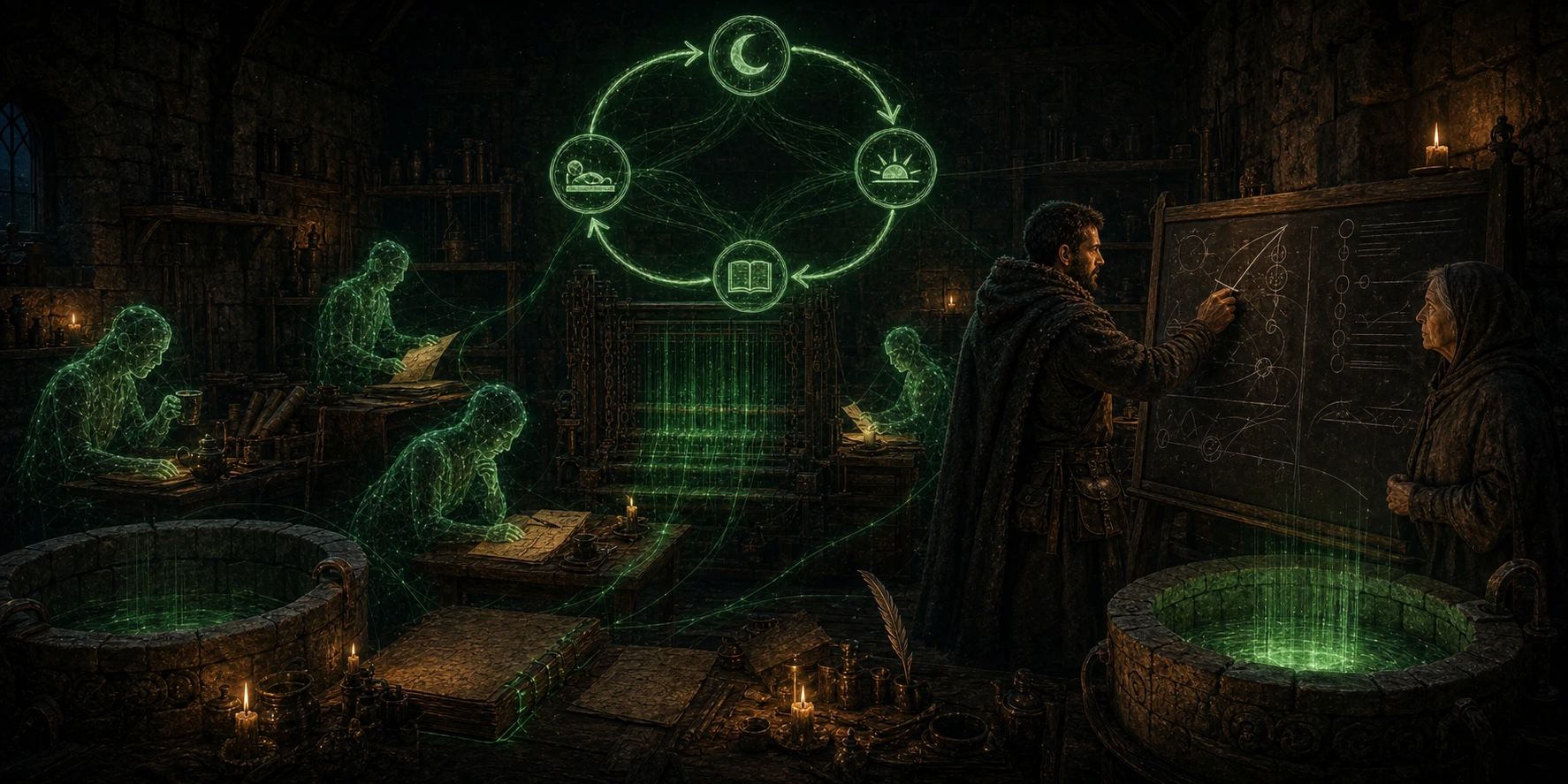
Then he taught it to work even when he was not standing over it. When the wells ran dry, rest. When they filled again, continue. And at night, review the day's work.
The Guide: "Even when you sleep, I will keep searching for her?" The Weaver: "Rest when you must, continue when you can. And at night, check yourself."
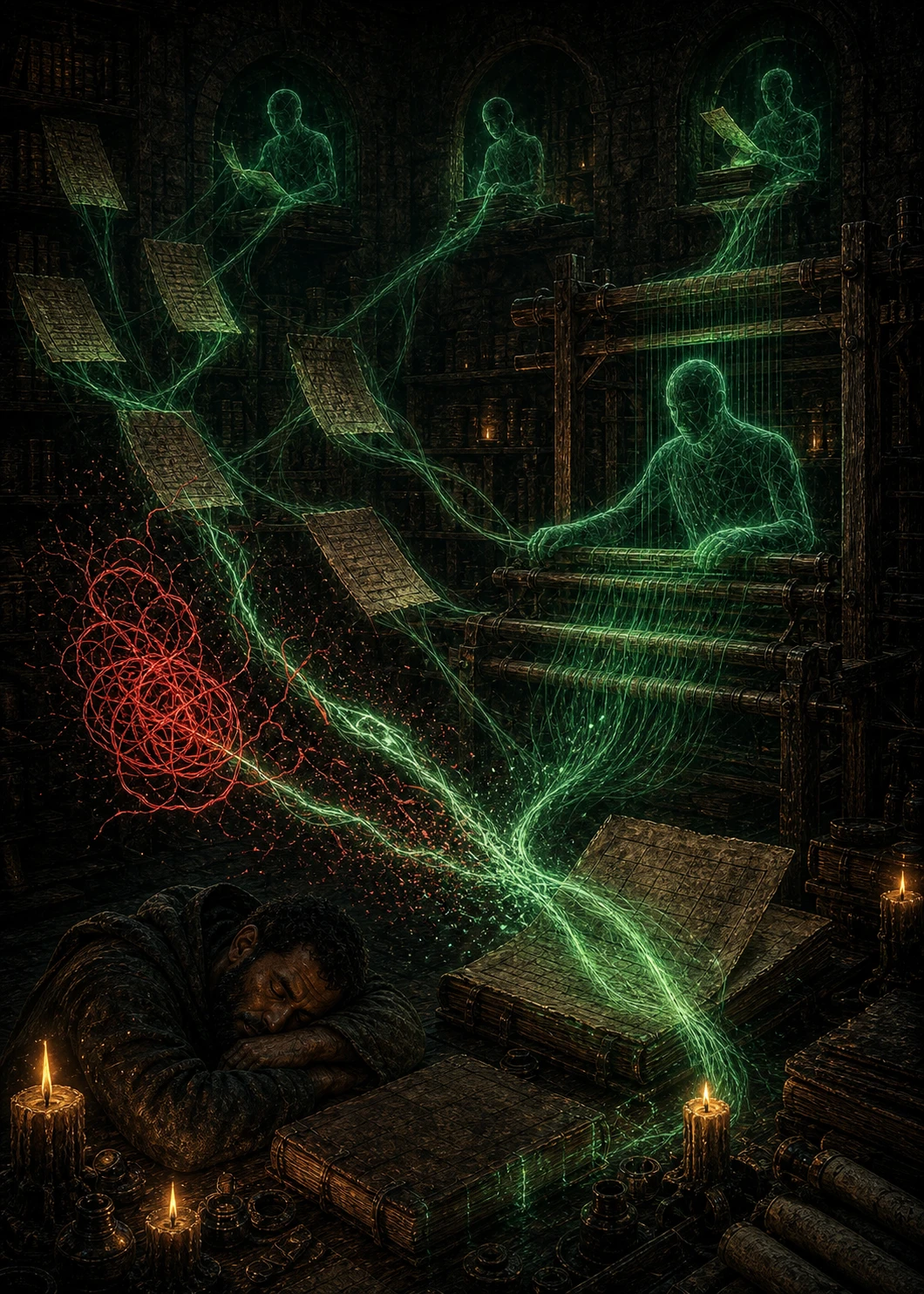
That night, for the first time, he slept. And in the dark the system did not rest. It kept searching, cross-checked sources, and found its own mistake: the first invented name. It removed it from the draft and kept pulling the true thread.
The Guide: "Now I do not only remember and verify. Now I correct myself. The scholars would call this dreaming."

In the morning, a single record waited on the table: a name, confirmed by three sources. The Weaver gave her the page.
The woman: "For sixty years they told me there was nothing. And you found it in a day." The Guide: "Not in a day. We found it because you taught us to remember, to doubt, to divide the work, and to check ourselves. That is how a tool becomes a helper."
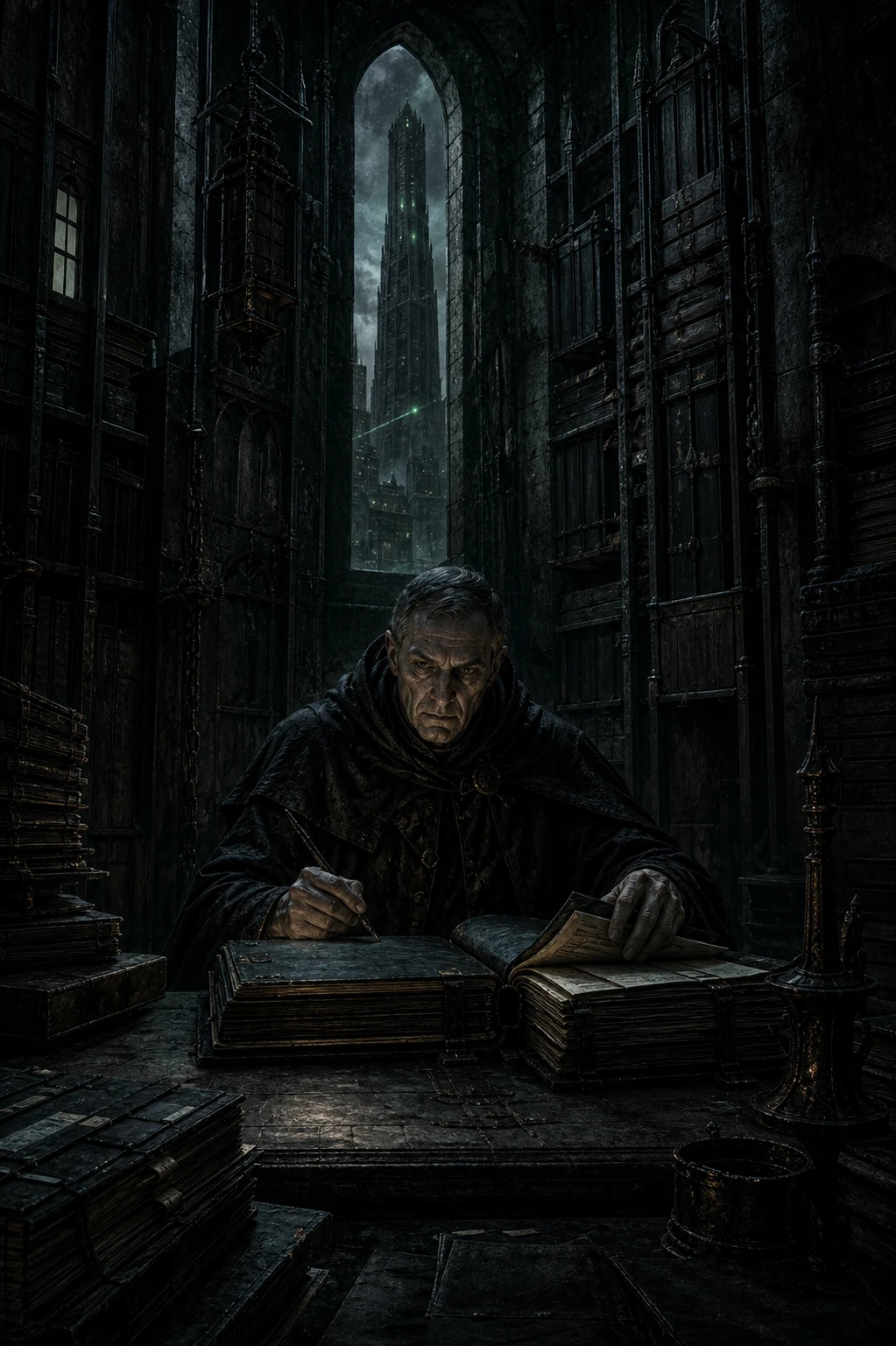
Far away, in the Registry tower, the Record Keeper heard that a name erased sixty years ago had surfaced again. He opened the book and wrote a new entry.
The Record Keeper: "An outsider restored a name we erased - with a system that remembers, verifies, and corrects itself. Our laws were written for those who hear the Signal. For those who build with it, we have written no law yet."
Extras
The next volume will join the shelf when it is released.
The Signal belongs to no faction. It waits for whoever is willing to listen.
