
What Are Zero-Shot and Few-Shot Learning? ⛹
Imagine a world where AI models can perform complex tasks without needing to be fed thousands of examples. A world where an AI system can identify a rare disease it has never seen before, or translate into a language it never encountered during training. That is exactly what Zero & Few Shot Learning is all about.
Why Do Zero & Few Shot Learning Matter?
Let’s start with the fundamental problem: deep learning models need a lot of data. They require thousands — sometimes millions — of labeled examples (Label Data) to achieve strong performance. But what happens when we don’t have enough examples? Or in cases where collecting and labeling data is expensive, complicated, or simply impossible? That is precisely where Zero-Shot Learning and Few-Shot Learning come into play.
0️⃣ Zero-Shot Learning — Learning Without Any Data
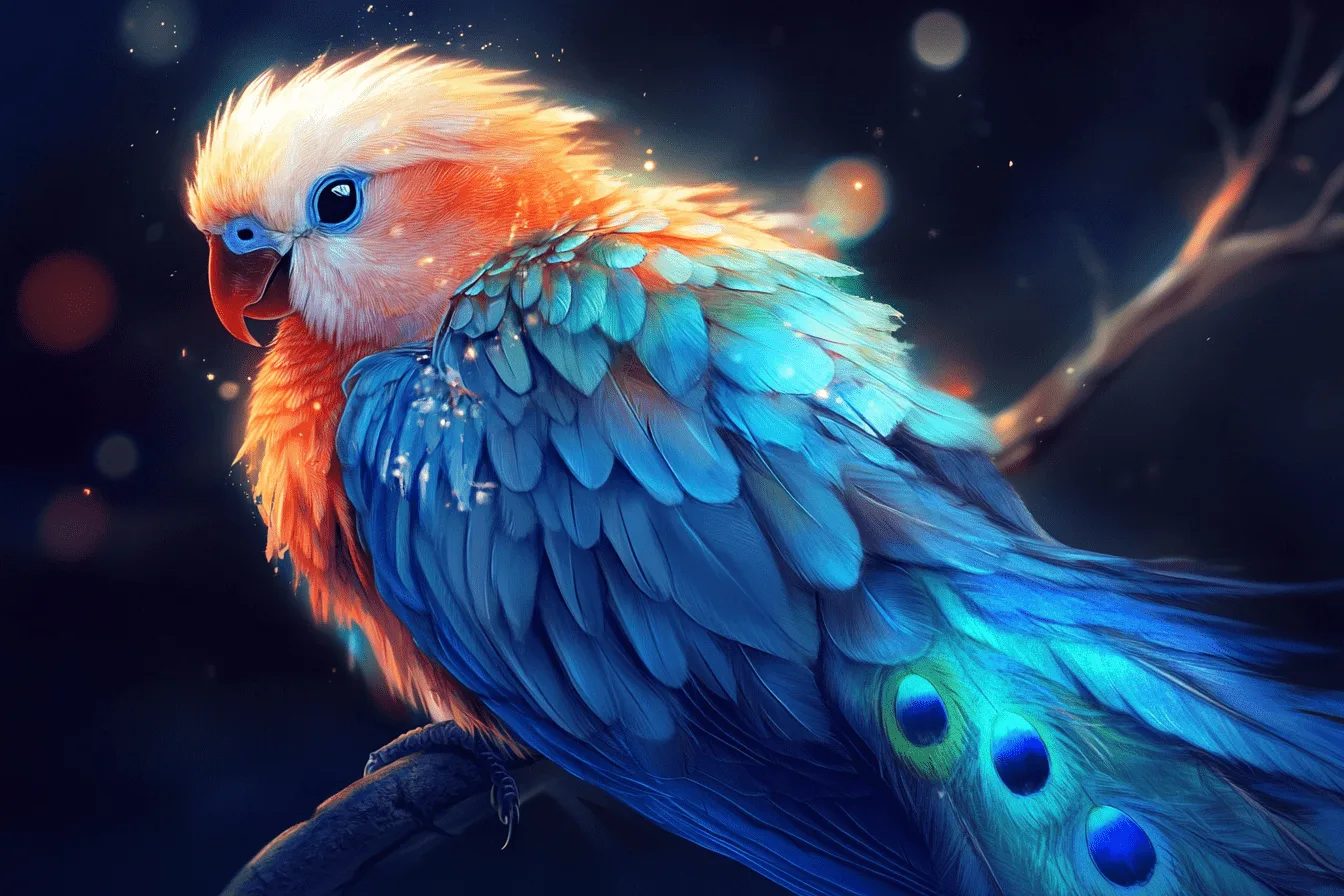
Imagine encountering an animal you have never seen before. Say, a rare parrot species called the “Caribbean Zophit.” You’ve never come across one, but someone tells you it looks like a cross between a dove and a peacock-tailed bird.
Boom 💥 — now you know what it looks like, without having seen a single image of it.
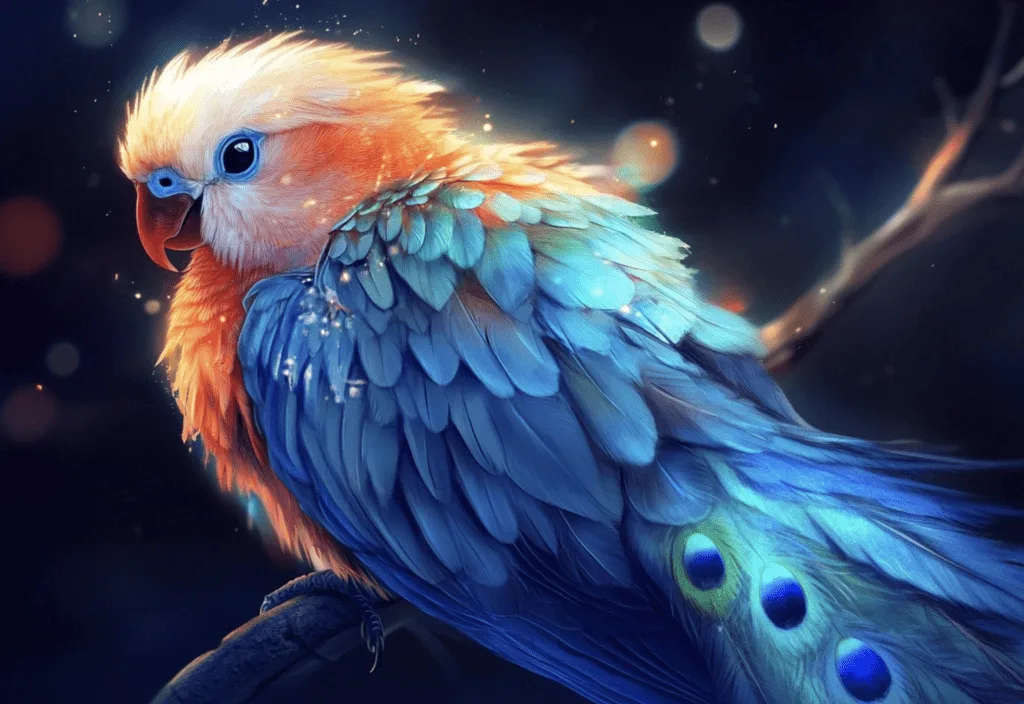
That is exactly what Zero-Shot Learning does. The model has seen no examples whatsoever, yet thanks to natural language descriptions or lists of attributes, it manages to make the right prediction.
Zero-Shot Learning is a technique that enables AI models to classify and perform tasks on categories they have never encountered during training. Rather than relying on labeled examples, ZSL uses semantic descriptions — such as attribute lists or natural language descriptions — to bridge the gap between what the model has learned and the new classes it needs to handle.
How Does It Work?
- Using semantic meaning — The model learns from existing linguistic contexts. It connects the literal meaning of words to things it already knows. For example, if someone describes a “metallic unicorn” to you, you can guess it resembles a regular unicorn 🦄 but is made of metal. Even without ever seeing one, your mind uses existing context to imagine it.
- Generative learning — The model creates new information similar to what it already knows. It can generate synthetic examples that allow it to learn even when no real data is available. Think of trying to imagine a food that doesn’t exist yet — say, “sweet pizza” 🍕. Even though you’ve never seen one, you can picture a crispy base, chocolate sauce, and fruit toppings.
- Knowledge Transfer — Using existing knowledge to understand a new domain. Instead of starting from scratch, the model draws on knowledge of things it already knows to make sense of something new. Think of knowing how to ride a bicycle 🚴♂️ and then trying to learn skateboarding 🛹. It’s not exactly the same, but your prior knowledge of balance and movement helps you learn faster.
For example, image recognition systems like OpenAI’s CLIP can link images to words even when they were not specifically trained on the object in the image. In other words, you can show the model a photo of a blue whale, and it will correctly identify it as a “whale” — even though it was never trained on such images.
5️⃣ Few-Shot Learning — Learning From a Handful of Examples
If Zero-Shot is the highest level of smart guessing, Few-Shot Learning is like learning a guitar solo 🎸 by watching a few YouTube videos.
Few-Shot Learning is a model’s ability to learn from a very small number of labeled examples — typically between 1 and 5 examples per category. This technique is designed to allow models to quickly adapt to new tasks or categories with a minimal amount of training data.
Companies like Google and OpenAI use Few-Shot techniques to teach models like GPT-4 how to understand a specific domain from just a few examples, rather than feeding them thousands of labeled samples.
Differences Between Zero-Shot and Few-Shot Learning
| Method | Number of Examples | 🟢 Advantages | 🔴 Disadvantages |
|---|---|---|---|
| Zero Shot | 0 | Cost-efficient, handles novel cases, and works well when collecting examples is not feasible. | Relies on high-quality semantic descriptions |
| One Shot | 1 | Balanced between flexibility and accuracy | Still requires one example per category |
| Few Shot | 1–5 | More accurate than the other methods | Requires more labeled examples |
A Quick Exercise: Zero vs. Few Shot Prompting
If you work with models like GPT, Gemini, or Claude, you have probably come across the terms Zero-Shot and Few-Shot Prompting. Let’s see how this approach plays out when instructing a model. Open GPT and enter the following prompt, then check what result you get:
Classify the following sentence as positive, negative, or neutral:
“The service at the restaurant was slow, but the food was absolutely delicious.”
Now enter this prompt 👇 and see the difference:
Classify the following sentences as positive, negative, or neutral:
Sentence: “I really loved the movie.”
Classification: Positive
Sentence: “The hotel was dirty and noisy.”
Classification: Negative
Sentence: “I ordered a shirt online.”
Classification: Neutral
Sentence: “The service at the restaurant was slow, but the food was absolutely delicious.”
Classification:
As you have likely noticed, using Few-Shot prompting generally produces more accurate and consistent results, especially for complex or domain-specific tasks.
✨ In Summary — Smarter AI With Less Data
Zero & Few Shot Learning represent a fundamental shift in how AI models are trained. These methods enable a move away from data-hungry models toward systems that can learn efficiently from minimal information — or even from descriptions alone. In the future, these techniques will enable:
- More accessible AI systems, even in data-scarce domains
- Faster development of new applications
- More resource- and energy-efficient systems
- A greater ability to handle the imperfections of real-world problems
In an era where information is power, technologies that allow models to learn with little or no data open up endless possibilities.
By the way, if you want to try training a model yourself, you can visit Teachable Machine and experiment with training your own machine learning model.