
A while back I attended a lecture and summarized it into bullet points. After the lecture, I took those notes, dropped them into NotebookLM, and created a virtual “podcast” from them — or what Google calls a Deep Dive.
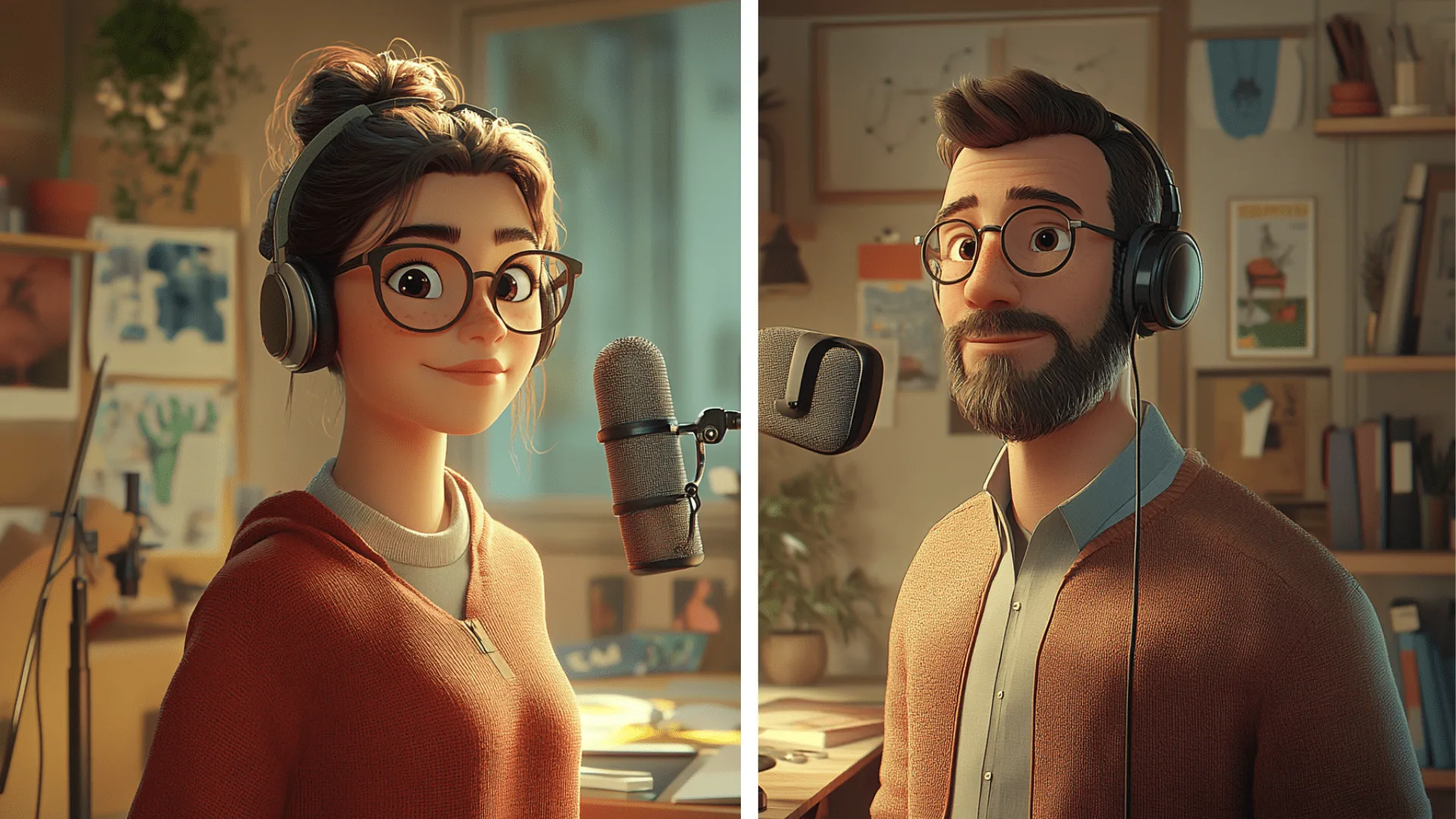
In the next step I split the podcast into two separate audio channels, one for the male voice and one for the female voice. I created two animated podcast-host characters in Midjourney, then took each character together with its corresponding audio channel and uploaded them to HeyGen to animate the characters and bring them to life.
In the final step, I uploaded both video clips — with the animated characters — to CapCut, did a bit of editing, and added subtitles (or more accurately, let the AI add the subtitles), producing an animated podcast episode that you can watch right here below 👇
In this episode we dive into the fascinating world where machine learning principles meet human learning 🌟. We explore key strategies such as diverse exposure, contextual learning, and feedback, and discover how to apply them in your everyday life to become a more effective and adaptable learner 💡. Join us and find out how AI-inspired techniques can upgrade your learning process in ways you never imagined! 🤖📚
What Can Be Applied to Human Learning?
One of the most interesting takeaways from machine learning is the importance of diverse examples, rapid feedback, and clear context. Humans, too, learn better when they encounter the same concept across multiple different situations, receive timely feedback, and understand why the knowledge is relevant.
When designing a learning process, it is therefore worth incorporating repeated practice, real-world examples, and feedback that enables correction. This connects both to the distinction between supervised and unsupervised learning and to the question of how to build an environment that enables genuine knowledge transfer rather than mere content consumption.