

What can we learn from the Future of Jobs Report 2025 published by the World Economic Forum?
According to the report, by 2030, 39% of the skills required in the labor market will change — and that’s just part of the transformation ahead of us in the next five years.
What does this mean for us? I’ve put together a brief review of the key insights from the report, what our role is within this change, and — more importantly — what we as learning and development professionals in organizations need to do to lead these changes. Now is the time to hit ▶️ 👇
Here Are a Few More Fascinating Figures from the Report
By 2030, changes in the labor market are expected to affect 22% of all jobs that exist today.
It is estimated that approximately 92 million existing jobs are expected to disappear, while 170 million new jobs are expected to be created. This shift will result in a net growth of 78 million new positions.
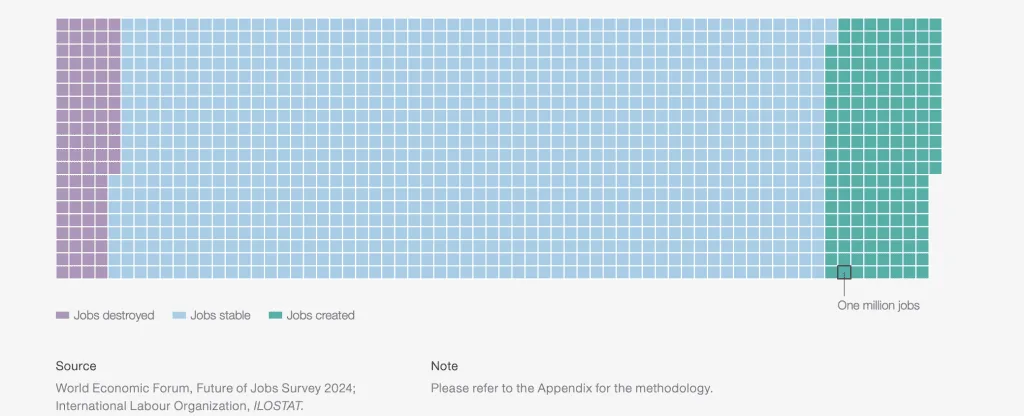
Around 63% of employers identify skills gaps as a major challenge they will need to address in the coming years. Technological skills such as artificial intelligence, Big Data, cybersecurity and information security, are becoming increasingly critical. By 2030, approximately 60% of workers will need to undergo retraining or upskill.
In this environment, companies must offer training programs that enable their employees to adapt to technological and occupational changes.
Companies are investing budgets in re-skilling and upskilling initiatives designed to support the execution of business plans and the organization’s strategic priorities.
Core Skills for the Next 5 Years
Soft Skills
🧘♂️ Flexibility and adaptability
🧠 Analytical and creative thinking
🗣️ Interpersonal communication
🧗♂️ Leadership and management
Technological Skills
🤖 Artificial intelligence
📊 Data analysis
👺 Cybersecurity and information security
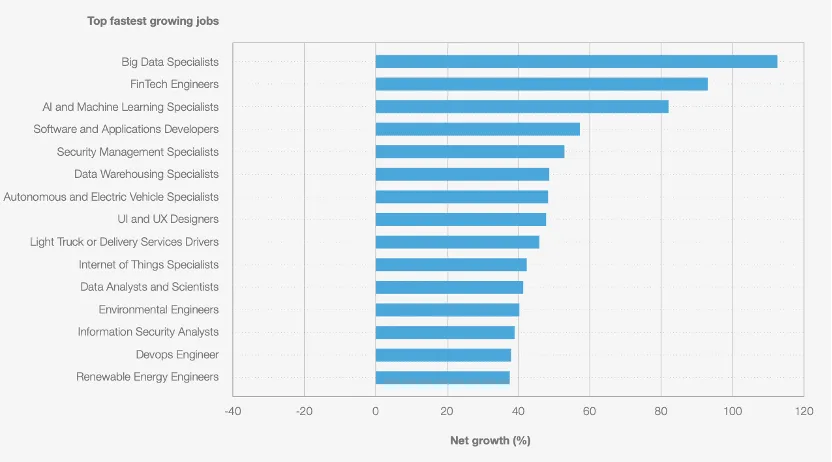
Growing Occupations 📉
In Summary
Successful companies view employee training as a strategic investment, not an expense. They understand that effective training programs can deliver both short-term and long-term benefits for the organization.
The benefits of investing in employee development:
- Profitability — Companies that invest in professional development and employee training experience profit margins 24% higher than those that do not.
- Improved employee retention — Effective training programs can reduce employee turnover by up to 70%, leading to significant savings in recruitment and hiring costs.
- Increased productivity — Organizations that invest in their training and employee development processes see, on average, 2.5 times higher productivity compared to their peers.
- Higher revenue per employee — Companies that invest in training enjoy 218% higher revenue per employee compared to those that do not.
The Future of Jobs Report 2025
If this post has sparked your curiosity and you’d like to read the Future of Jobs Report in depth — published by the World Economic Forum every three years — you can click the button right here and download the report from the World Economic Forum’s website.